
Denelle Dixon argues banks must choose between proprietary and open blockchain infrastructure for tokenized assets, as this decision creates lasting path dependencies. Open networks offer interoperability, reduced concentration risk, better auditability, and faster adaptation compared to vendor-controlled systems.
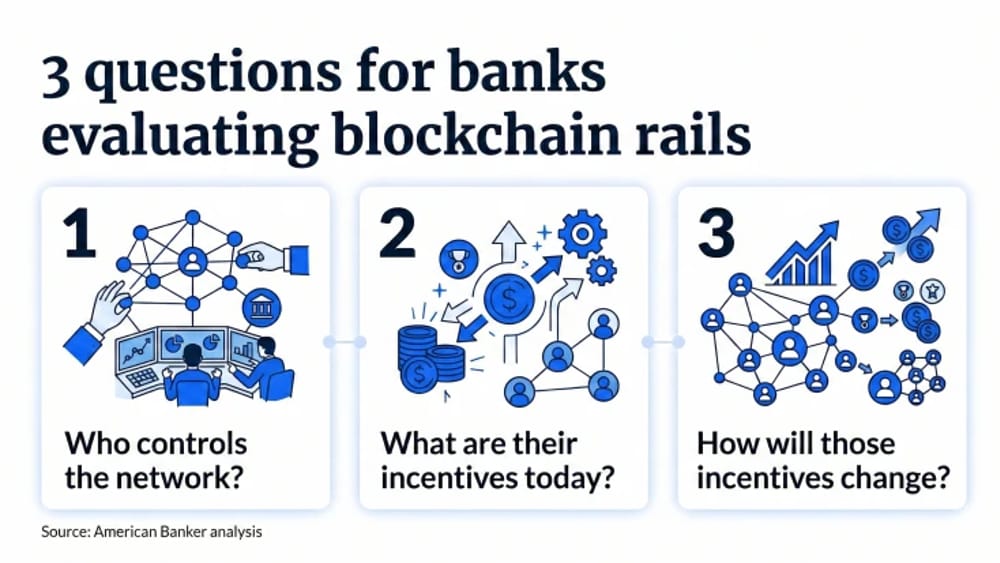
In this opinion piece, Stellar Development Foundation CEO Denelle Dixon examines the critical infrastructure choice facing banks deploying blockchain-based financial products. With the tokenized real-world asset market at $33 billion, banks must decide between proprietary systems controlled by vendors and consortiums versus open, decentralized networks. Dixon argues open infrastructure provides four key advantages: permission-free interoperability that reduces cross-border payment costs, distributed risk across independent validators, transparent auditability for regulators, and faster adaptation to change. She addresses common bank concerns about public networks, noting that asset governance and network openness are separate design choices, and that major institutions like BlackRock and Fidelity already tokenize on public networks. The piece emphasizes that blockchain infrastructure creates generational lock-in effects, making the choice between proprietary and open systems fundamentally about who captures value and whose interests the system serves.