
Stellar's RWA sector has quadrupled to $3B in 7 months, but DeFi integration stalled on one bottleneck: pricing. Traditional crypto relies on continuous 24/7 trading for price feeds, while RWAs trade intermittently and require cross-chain data pipelines. SEP-40 standard and RedStone's oracle infrastructure solve this, enabling RWAs to flow into lending and trading protocols.
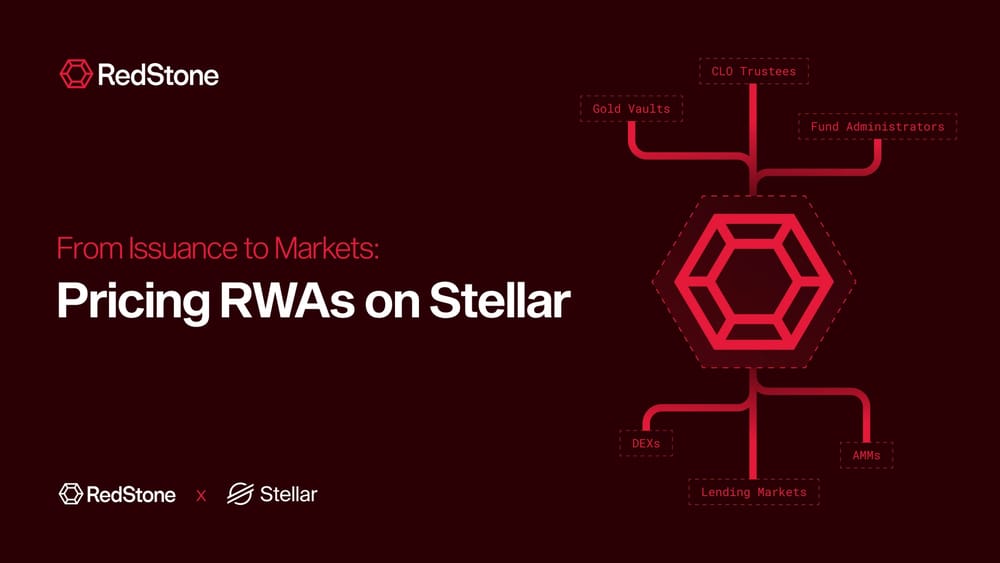
Stellar has become a leader in tokenized real-world assets, growing from $800M in January to $3B+ by July 2026, with major issuances like Ondo's USDY, Spiko's T-Bill fund, and Franklin Templeton's BENJI. However, DeFi TVL sits at $259M with RWAs under $2M across protocols. The gap is pricing infrastructure. Crypto tokens have 24/7 trading venues for continuous prices, but RWAs trade intermittently and derive value from portfolio composition. Stellar's SEP-40 standard defines a unified interface for smart contracts to consume price data from any oracle. RedStone implemented SEP-40 for RWAs in March 2026, enabling the 24/7 pricing that protocols like Templar and Centrifuge need to accept RWAs as collateral. This infrastructure unlocks RWA composability.




