
This article explains the multi-layer architecture of modern Web3 blockchains, from Layer 0 foundations to Layer 3 specialized applications. It covers key examples like Cosmos, Ethereum, Optimism, and briefly mentions Stellar among supported L1 networks in the HOT Wallet. The piece promotes a multi-chain wallet for seamless interaction across these layers.
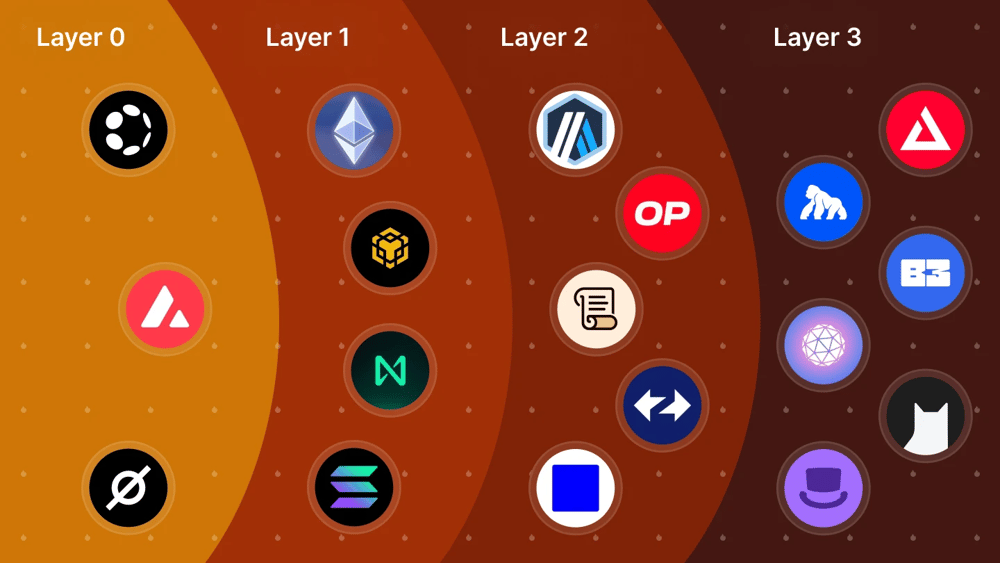
The article breaks down blockchain layers: Layer 0 (e.g., Cosmos, Polkadot) provides foundational tools for creating interoperable networks; Layer 1 (e.g., Ethereum, Solana, Stellar) handles core consensus, security, and smart contracts with native tokens; Layer 2 (e.g., Arbitrum, Optimism) scales L1 by processing transactions off-chain for speed and low fees; Layer 3 (e.g., APE Chain, Xai) specializes in app-specific optimizations. It highlights trade-offs in decentralization, speed, and cost across layers. The HOT Wallet is promoted as supporting over 140 blockchains, including Stellar, with features like cross-chain bridges and gas refuel for easy multi-layer access. Users can interact with all layers via a single interface without technical hurdles.

