
This article explains the Stellar DEX pricing limitation for indivisible NFT tokens due to INT32 constraints and presents Litemint's solution using synthetic assets and path payments. It details how small stroop amounts cause offer price overflows and demonstrates a workaround for high-value NFT trades. The post includes JavaScript code examples for implementing bids and offers that automatically handle the limitation.
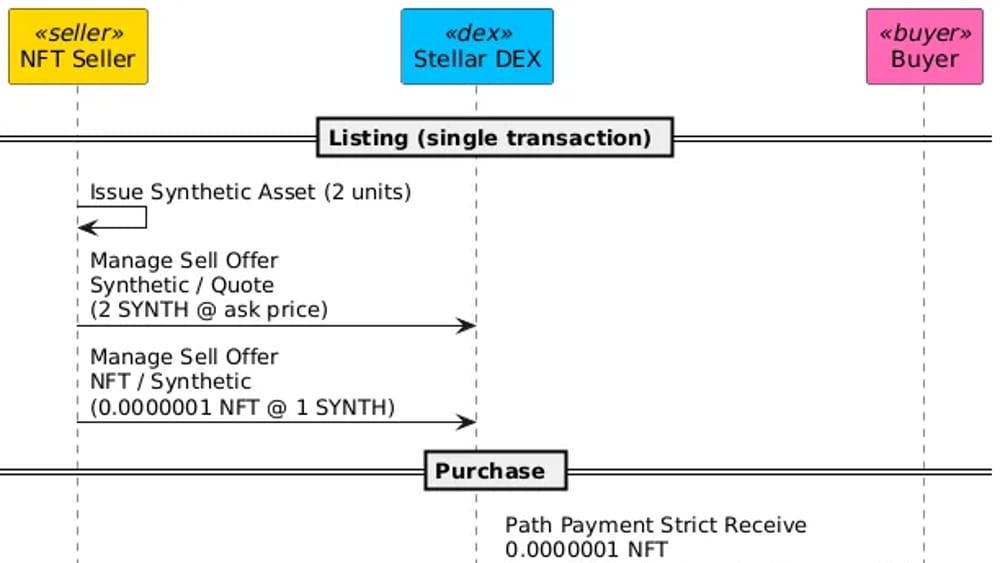
The Stellar DEX has a pricing limitation for indivisible tokens like NFTs issued in 1 stroop units, as the INT32 type used for price fractions caps offers at around 214.7 units of the quote asset. This prevents high-value NFT trades on pairs like NFT/USD or NFT/XLM. Litemint NFT marketplace solves this by using self-issued synthetic assets as intermediaries, paired with path payments for flexible cross-currency trading. Sellers price NFTs against the synthetic, which is then priced against the desired quote asset, bypassing SDEX limits transparently. The solution issues 2 units of synthetic for spam protection and includes JavaScript functions using Stellar SDK that automatically switch to the synthetic method for prices exceeding the limit. Path payments enable versatile currency choices without direct offer constraints.

