
This article explains USDT and USDC stablecoins, their features, blockchains, use in payments, comparisons, stability issues, and alternatives. USDC is highlighted on Stellar among other chains, while USDT supports a broader range. Both are key for stable crypto transactions despite past depegging events.
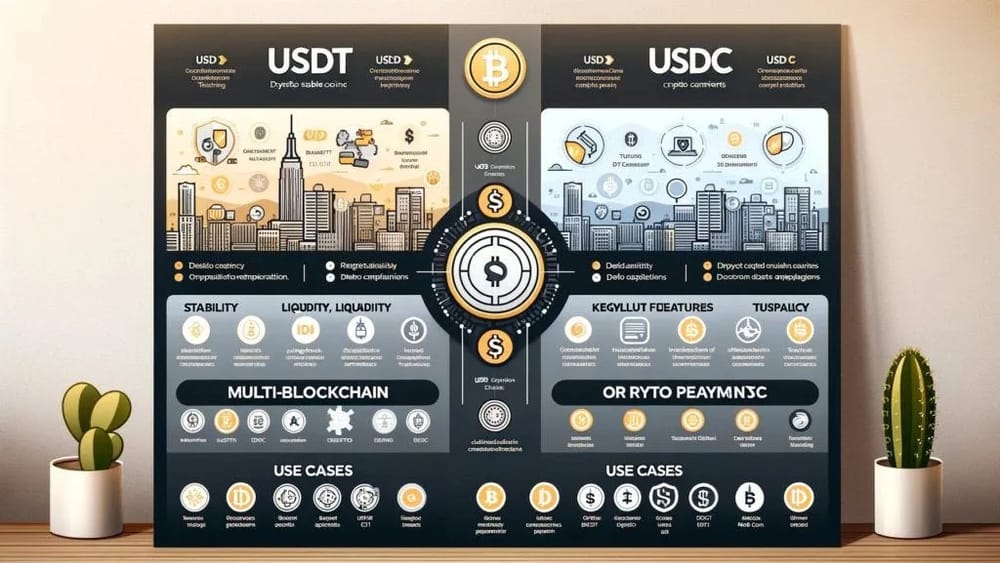
The article details Tether (USDT), launched in 2014 by Tether Limited, and USD Coin (USDC), launched in 2018 by Circle and Coinbase, both pegged 1:1 to the USD for stability in crypto payments. USDT boasts a larger $83.4B market cap, high liquidity, and support on numerous blockchains including Ethereum, Tron, and others, making it ideal for trading. USDC, with $27.7B market cap, emphasizes transparency via monthly audits and runs on Ethereum, Solana, Algorand, and Stellar, appealing to DeFi and institutional use. It compares their stability, noting historical depegging incidents like USDT in 2018/2022 and USDC in 2023 due to SVB collapse, alongside regulatory scrutiny on Tether. Alternatives include fiat-collateralized (BUSD, TUSD), gold-backed (PAXG, XAUT), and algorithmic stablecoins like DAI, with risks highlighted. The piece concludes both are pivotal for crypto payments, choice depending on liquidity vs. compliance needs.

