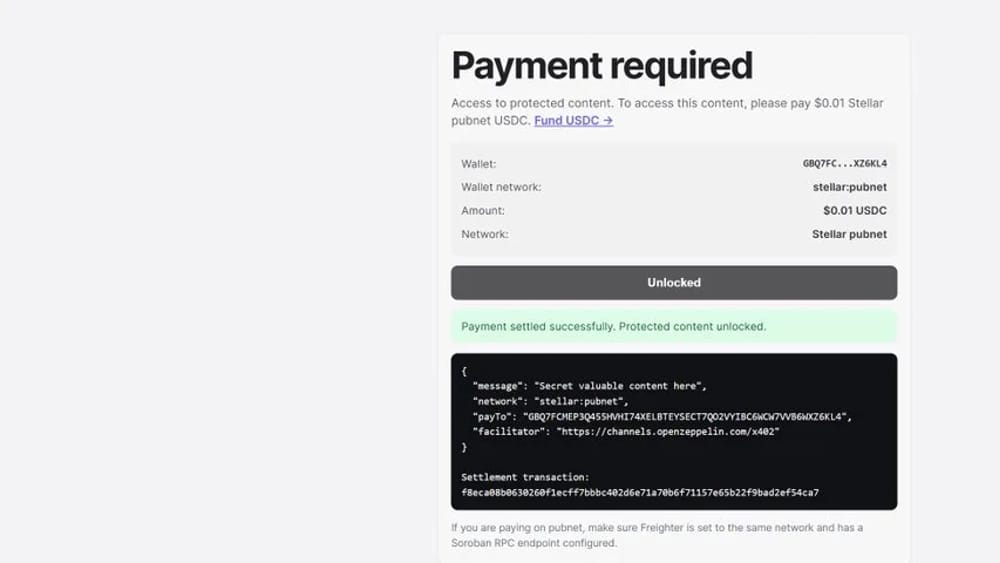
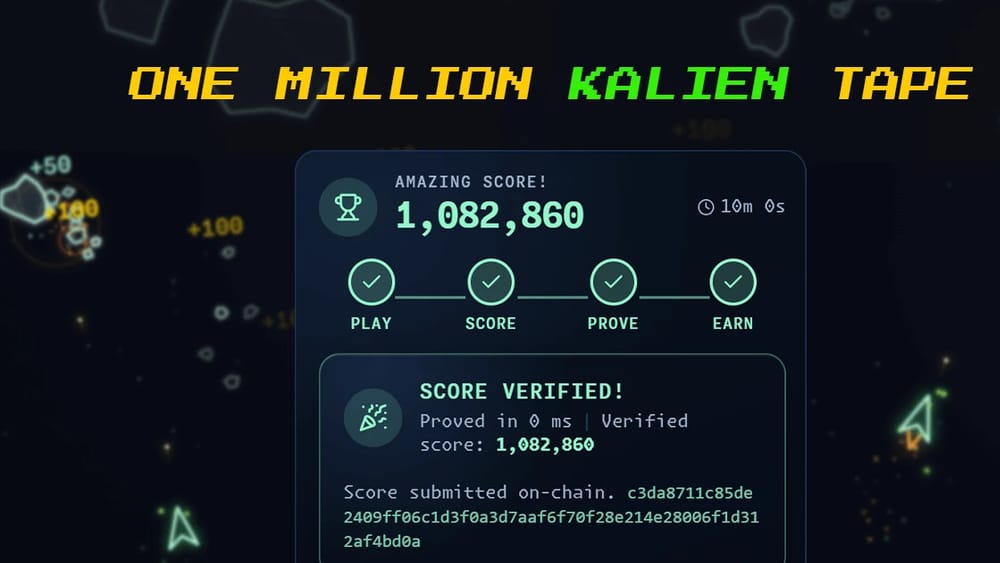
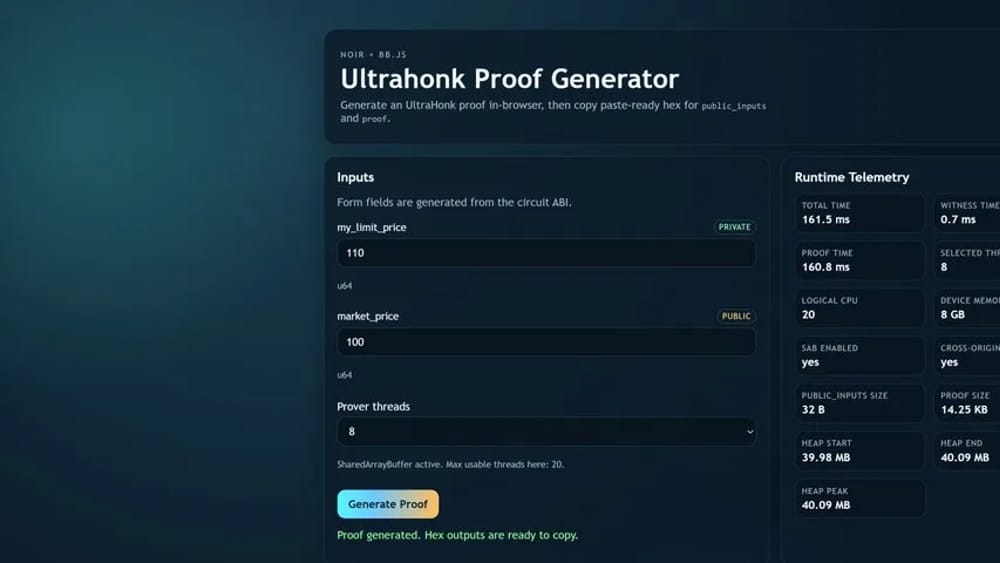
Space and Time now indexes Stellar blockchain data, enabling developers to build data-driven financial apps and smart contracts with access to verifiable historical, cross-chain, and offchain data.
DeFi, payments, tokenization, Soroban, governance, and project launches — curated daily from publications, project blogs, and community channels across the Stellar blockchain ecosystem.
Space and Time now indexes Stellar blockchain data, enabling developers to build data-driven financial apps and smart contracts with access to verifiable historical, cross-chain, and offchain data.
Tansu has been officially deployed on Stellar's mainnet with contract ID CDXINK2T3P46M4LWK35FVIXXHJ2XHAS4FOVCGVPJ63YV5OVTM24IY5BI. Users can view the contract on Stellar Expert and access the dApp at app.tansu.dev to register projects and secure software supply chains.
Spiko details their custom blockchain infrastructure for handling indexing, real-time queries, and transaction relaying across multiple networks including Stellar. They moved away from off-the-shelf solutions like The Graph due to reliability issues, building a robust system using RPC servers. This architecture improves efficiency, reduces bugs, and speeds up expansion to new chains.
Protocol 24 is a stability upgrade for Stellar that fixes a bug in the state archival feature. The upgrade was completed on mainnet on October 22, 2025, with infrastructure operators and validators required to update their software.
A comprehensive tutorial on implementing tokenized vaults on Stellar Soroban following the ERC-4626 standard pattern. The article explains vault mechanics, security considerations like inflation attacks, and details both read-only and state-changing vault functions for deposits, withdrawals, and asset conversions.
TokenOps leverages Stellar's Soroban smart contracts for scalable, low-cost token operations including airdrops, vesting, and TGEs. It offers 3-5 second settlement times, fixed fees, and real-time tracking with backend persistence. This enables efficient automation, transparency, and compliance for Web3 projects on Stellar.
Cursor, an AI-powered code editor, is promoted for students worldwide, offering free Pro access with a university email. It accelerates coding, problem-solving, and project execution, with a livestream tutorial demonstrating a dApp build using Next.js and Stellar Wallet Kit. The article highlights its benefits for students in Latin America building on Stellar, from smart contracts to DeFi protocols.
Veridise has published a security checklist for Soroban developers to prepare for smart contract audits. The guide covers best practices and vulnerability prevention for building on Stellar's native smart contract platform.
The article argues that Web3, including blockchain technologies, may succeed like cloud computing by becoming invisible infrastructure for developers rather than a consumer-facing product like ChatGPT. It outlines key barriers to adoption such as poor UX, fragmentation, unclear regulations, and onboarding challenges, and emphasizes the need for unique value propositions like trustless coordination. A linked post highlights Stellar's role in bridging assets with Near intents, tying into broader interoperability discussions.
Webacy has been selected as a recipient of the Stellar Community Fund Build Award in SCF Round #38. Out of 83 submissions, 24 projects were chosen for their contributions to the Stellar ecosystem. Webacy will bring advanced risk intelligence and decisioning infrastructure to enhance security on Stellar.
Guide to integration testing best practices for Soroban smart contracts using JavaScript, covering realistic local network testing, end-to-end user flows, state validation, edge cases, and CI automation with practical examples.
Range's Stablecoin Explorer provides a unified view of stablecoin transactions across 100+ chains including Stellar, and 21 bridges, solving cross-chain visibility issues for wallets, dApps, and bridges. It offers one-step integration with full transaction lifecycle tracking, entity enrichment, and blacklist integration. Teams can link users to a single explorer for improved UX without engineering overhead.
Range launches Stablecoin Explorer, the first dedicated cross-chain and intra-chain tracker for over 20 stablecoins across 100+ chains and 21 bridges. It offers real-time transaction details, public analytics, entity labeling, and integrated sanctions blacklists. Stellar is highlighted as a major hub for intra-chain stablecoin activity.
Hoops Finance's CTO Tim Baker details their indexer upgrades on Stellar for Protocol 23 support, resumable ingestion, and historical contract specs. They store raw transaction data before parsing, resume from exact pages to avoid re-ingestion, and maintain historical WASM bytecode to correctly parse upgraded contracts. This ensures precise, durable data across Postgres, MongoDB, and Neo4j for market analytics and dashboards.
Stellar Development Foundation details major upgrades to Stellar Core aimed at achieving 5000 TPS and reducing block time to 2.5 seconds. The improvements parallelize transaction dissemination, consensus voting, and block execution across separate threads, with v22.1.0 already deployed and showing significant main thread pressure reduction.
Stellar Protocol 23, named Whisk, introduces unified events and parallel transaction processing to improve developer experience and network scalability. The protocol launches September 3rd and includes fee reductions, state archival foundational work, and configurable network parameters.
Trustless Work released Escrow Blocks, a production-ready React library that provides pre-built UI components and providers for integrating stablecoin escrows into applications in minutes. The library abstracts away smart contract complexity, enabling developers to build escrow flows from funding through milestone approvals and disputes without extensive development time.
A comprehensive guide to 'vibe coding'—using AI and large language models to assist with software development. The article covers best practices for prompting, providing context to AI models, and recommends tools including AI code editors, various LLMs, and MCP servers to enhance the development workflow.
Stellar has launched RPC integration with a ledger data lake, enabling developers to access any historical ledger from genesis to present through RPC queries. The feature uses SEP-0054 standardized format and can be accessed via public data lakes or self-hosted using Galexie, with the getLedgers endpoint now supporting full historical data retrieval.
Trustless Work launches Vibe Coding, a new documentation section that provides AI-ready prompts and global context for developers to build escrow-powered applications using AI tools like GPT-5 and Claude. The guide includes step-by-step workflows, coding standards, and verification checklists to ensure production-ready code.
July was a landmark month for Stellar, featuring new SDF leadership appointments, major integrations with Visa for stablecoin settlement, and significant ecosystem advances in DeFi, cross-chain communication, and developer tooling. The network celebrated its 11th birthday while the community engaged in global hackathons and grant programs.
Trustless Work presents a modular toolkit for integrating escrow functionality into products, featuring an API, Next.js SDK, Back Office dApp, Demo Lab, and E…
Certora Prover Version 8.1.0 introduces breaking changes including minimum Java 19 and Python 3.9 requirements, default sanity checks, updated requireInvarian…
Usher Labs shifts focus to zkTLS for verified private data on blockchains. Verity zkTLS, now in early testing, lets apps prove data from APIs without revealing secrets. Partners ChainSight and Truflation are pilot users. A foreign exchange liquidity protocol launches in fall 2025.
Templar Protocol, a decentralized lending platform, published its roadmap for expanding Cypher Lending across multiple blockchains. Starting with Bitcoin and Ethereum in Q2 2025, the protocol plans to add Stellar, Solana, Cardano, and dozens more chains through 2026, with privacy features and chain abstraction.