Stellar Dev Skill is a new open-source tool that integrates with AI coding agents (Claude, OpenCode, Codex) to provide up-to-date Stellar development guidance, covering Soroban contracts, SDKs, APIs, wallets, security, and DeFi ecosystem resources.
DeFi, payments, tokenization, Soroban, governance, and project launches — curated daily from publications, project blogs, and community channels across the Stellar blockchain ecosystem.
Stellar Dev Skill is a new open-source tool that integrates with AI coding agents (Claude, OpenCode, Codex) to provide up-to-date Stellar development guidance, covering Soroban contracts, SDKs, APIs, wallets, security, and DeFi ecosystem resources.
The Stellar Development Foundation hosted a successful AMA on r/CryptoCurrency on January 28, reaching ~30k views and fielding 127 comments. The discussion co…
Nethermind has deployed a Groth16 zero-knowledge proof verifier on Stellar's Soroban smart contracts, enabled by Protocol 25 (X-Ray) which adds native BN254 a…
Nethermind deployed a RISC Zero Groth16 verifier to Soroban, and Stellar's X-Ray protocol upgrade adds native BN254 and Poseidon cryptographic primitives. Thi…
A technical tutorial demonstrating how to verify RISC Zero zero-knowledge proofs within Stellar smart contracts using Soroban, enabling complex off-chain computations to be verified on-chain.
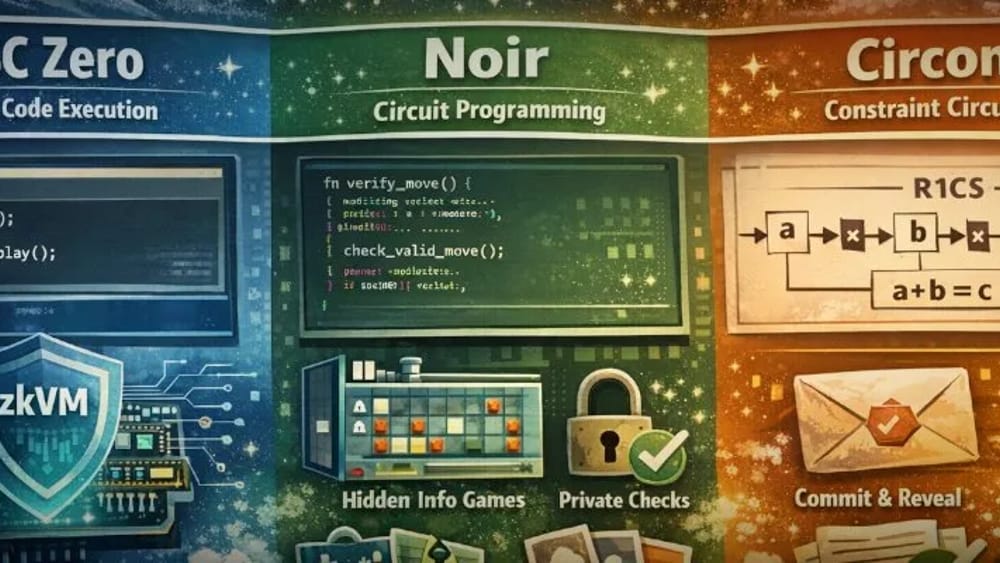
A developer guide comparing three zero-knowledge proof frameworks for the zkGaming on Stellar hackathon: Circom (traditional constraint-based circuits), Noir (Rust-like circuit language), and RISC Zero (full program execution in a zkVM). Each approach offers different trade-offs in expressiveness, developer experience, and on-chain verification complexity.
Spiko launched tokenized funds on Stellar in October 2025, detailing how they adapted their infrastructure to Soroban's unique constraints: TTL-based storage, sequence number limitations, and RPC data retention. They implemented channel accounts and fee bump transactions to achieve high throughput while maintaining clean authorization.
The Stellar Development Foundation introduced Meridian Pay, a production-ready smart wallet built on Stellar Mainnet that launched at Meridian 2025 in Rio de Janeiro. The wallet uses passkey-based authentication, eliminating seed phrases and passwords while enabling seamless onchain transactions with zero user-facing fees.
A comprehensive guide to building decentralized applications on Stellar's Soroban smart contract platform, covering essential developer tools, a step-by-step roadmap from setup through deployment, and community resources for support.
Soundness Labs and Mysten Labs have developed PQ-Chain, a backward-compatible upgrade for EdDSA-based blockchains like Stellar, Solana, Sui, and Aptos that adds quantum resistance without hard forks or address changes. It leverages the existing quantum-secure seed in EdDSA keypairs, proven via PQ-NIZK proofs at the transaction and account levels. This opt-in approach provides immediate protection during the transition to native post-quantum signatures.
Dfns introduces BYOABI, enabling clients to import smart contract ABIs and interact with them natively from Dfns wallets. This upgrades Dfns to manage full smart contract lifecycles like minting, burning, and pausing under its security and governance model. Future expansions include support for Stellar and other networks.
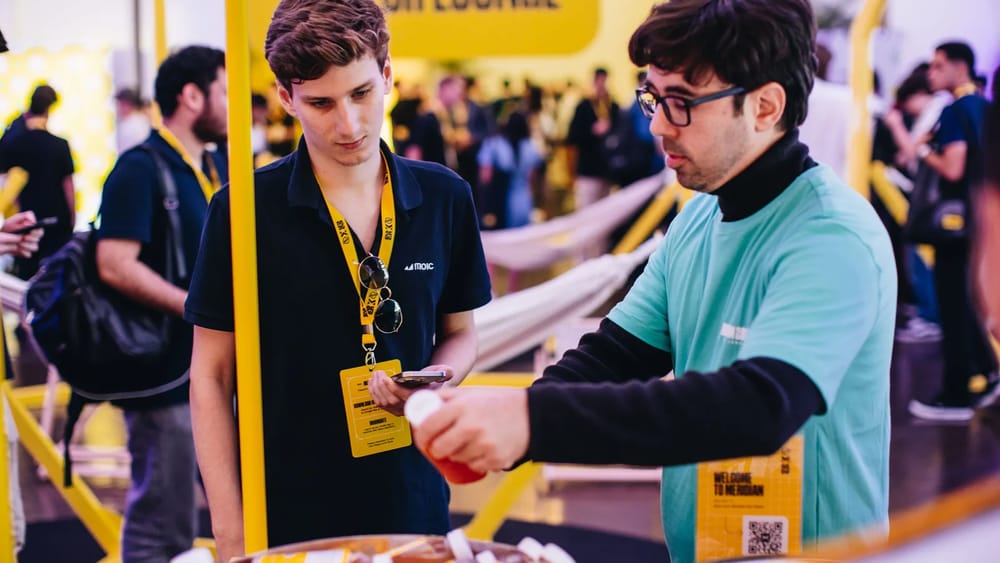
Meridian 2025 featured an innovative NFT activation that transformed the conference into an interactive art experience, with 24 global artists creating 80 unique works. Attendees collected proof-of-attendance NFTs via QR codes and tap-to-collect mechanics using Meridian Pay smart wallet, marking the first major real-world implementation of Stellar's SEP-50 NFT standard.
Stellar Protocol 25 X-Ray, voting tomorrow, introduces native zero-knowledge proof verification capabilities to Stellar smart contracts, including support for BN254 elliptic curves, Poseidon hashing, and Noir circuit verification.
An article discussing the importance of financial privacy in blockchain systems and how Stellar's upcoming Protocol X-Ray upgrade will enable zero-knowledge proof verification in Soroban smart contracts, allowing developers to build privacy-preserving applications while maintaining blockchain transparency.
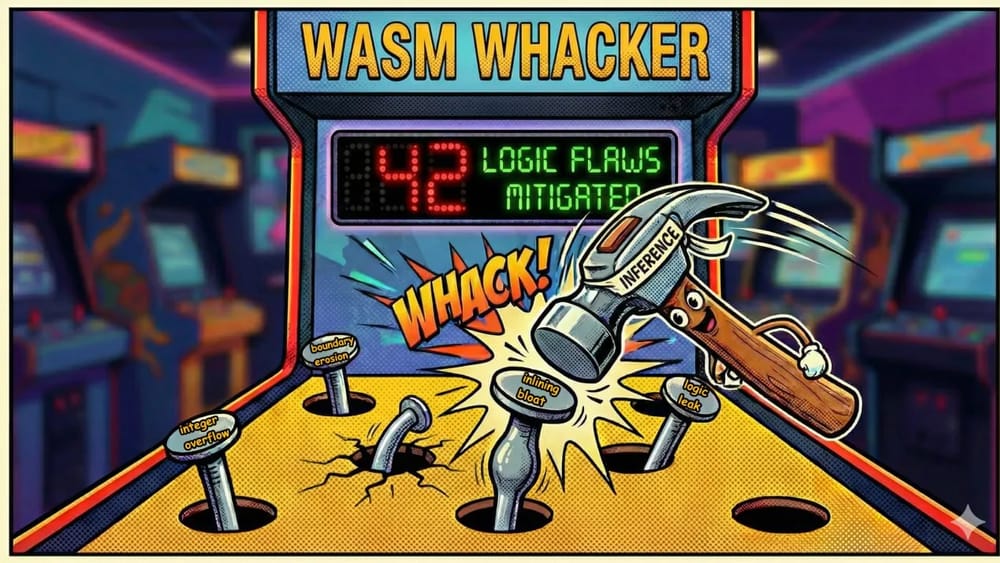
Inference, a formal verification framework, analyzes three WebAssembly-based blockchains for verifiability. Stellar Soroban emerges as the most feasible target due to its minimalist architecture and strict separation of business logic from infrastructure, unlike Polkadot's monolithic design.
Inference, a formal verification framework, analyzes three WebAssembly-based blockchain platforms—Polkadot Substrate, Stellar Soroban, and Arbitrum Stylus—eva…
This article explores Zero-Knowledge Proofs (ZKP) support on the Stellar blockchain, focusing on Soroban's host functions for BLS12-381 and upcoming X-Ray upg…
This article explores five zero-knowledge proof use cases for the Stellar ecosystem: zkTokens for private transactions, zkLogin for secure authentication, zkK…
Xcapit details a purpose-built DevSecOps framework for blockchain projects, spanning pre-commit security gates, smart contract static analysis via Slither and…
Certora's 2025 report highlights their expansion as a leading DeFi security partner, securing 70% of top protocols by TVL including Stellar, Aave, and Compoun…
Stellar hackathons are driving innovation by fostering collaborative development of decentralized apps on the Stellar blockchain and Soroban smart contracts. Key initiatives like the Build Better Contest and partnerships with UNDP's SDG Blockchain Accelerator turn ideas into real-world impact projects. These events build a thriving developer community through learning, networking, and funding opportunities.
Trustless Work introduces an escrow-based solution for grants, bounties, and hackathons on Stellar, making funding flows transparent and auditable. The platform locks sponsor funds upfront, maps winners on-chain, and releases payments only after multi-party approval, eliminating payment delays and opacity.
Trustless Work introduces a non-custodial escrow system for security deposits built on Stellar, where funds are programmable, rule-based, and default to refun…
Trustless Work explains how milestone-based escrow contracts solve the cash flow and trust problems in outsourced software projects. Instead of binary upfront…
Trustless Work introduces an escrow-based capital allocation system for tokenized projects, where investor funds are held in smart contracts and released prog…
Normal's 2025 recap highlights its evolution from a centralized product to a fully self-custodial, decentralized protocol built on Stellar. Key achievements include 30,000 lines of smart contract code for wallets, AMMs, DEX, synthetic assets, and on-chain indexes, a Halborn security audit backed by SDF, and a Stellar Community Fund grant. The team expanded with key hires like CTO Jay and frontend lead Niko, while hosting global community events.
Trustless Work reviews its 2025 achievements, including completion of the Draper University/Stellar Embark program, extensive hackathon participation across chains like Stellar and Solana, and shipping production-ready escrow infrastructure. The project highlights builder adoption, enterprise pilots in real estate tokenization and private credit, and Stellar's ecosystem growth with milestones like PYUSD launch. Looking to 2026, they aim to accelerate integrations, volume, and tokenized assets while preparing to raise capital.