
Stellar AMA Recap: DTCC, RWAs, Privacy & What's Next
SDF's Denelle Dixon, José Fernandez da Ponte, and Tomer Weller answered 43 Reddit threads on June 2, 2026 about DTCC's 2027 Stellar partnership, XLM's network role, privacy advances via Nethermind's Stellar Private Payments, institutional stablecoin momentum, and emerging-market adoption from Brazil to Bermuda.
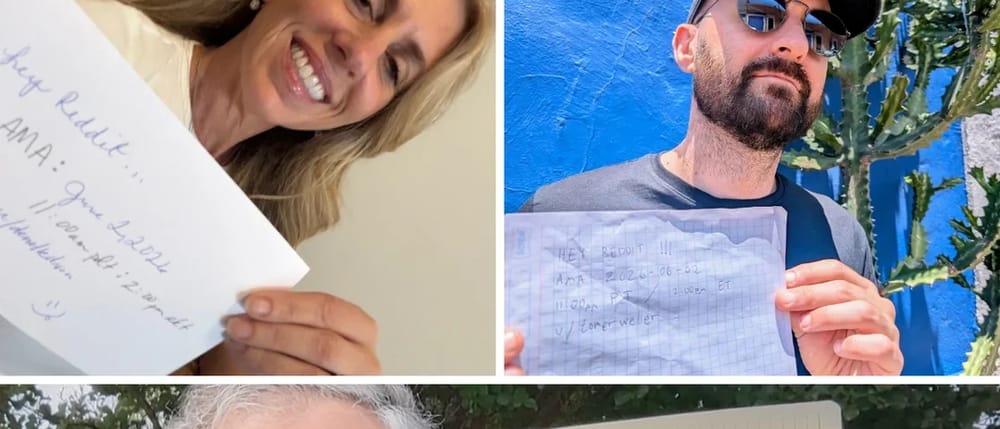
Hosted by the Stellar Development Foundation (SDF) on r/Stellar Date: June 2, 2026 (announced May 29) · 11 am PT / 2 pm ET
Participants
- Denelle Dixon, CEO, SDF (u/denelledixon)
- José Fernandez da Ponte, President & Chief Growth Officer (u/jose_fdaponte)
- Tomer Weller, Chief Product Officer (u/tomerweller)
The AMA drew ~94 comments across 43 top-level threads, with the three hosts contributing 36 answers between them. This recap groups the substantive Q&A by theme.
The headline: DTCC
The AMA was anchored by the announcement that DTCC's tokenization service is expected to connect with Stellar in the first half of 2027. Several questions probed what that actually means.
Is Stellar exclusive, or one of many chains? Denelle was direct that DTCC's strategy is deliberately multi-chain, and that this is the right call. Her view is that market infrastructure won't run on a single closed network; it wins the way the internet did, through openness and interoperability. The question she reframed as worth asking is why DTCC chose Stellar first: the network was measured against compliance, throughput, cost, risk, and resilience, and cleared that bar because SDF had done years of unglamorous groundwork. She argued that having regulated assets already live and moving on the network (not merely being "available" on it) is the advantage a later entrant can't simply inherit.
Is Stellar a settlement layer, or just tokenization? Denelle declined to stretch the language beyond what's been committed publicly. What's been said: the connection supports tokenizing DTC-custodied assets plus the full lifecycle, meaning conversion into tokenized form, corporate actions, and reporting. She emphasized that the lifecycle/servicing piece is the hard part and the part people underrate; tokenizing an asset is comparatively easy. On whether that equals "the settlement layer," she said the scope will speak for itself as use cases develop.
Does DTCC need to hold XLM? Tomer: No. DTCC flows don't depend on XLM as a bridge currency. Transaction fees are paid in XLM, but users can rely on fee-sponsorship services in the ecosystem (he cited OpenZeppelin's Relayer).
How long do partnerships like this take? Denelle: Years, not months. DTCC picked Stellar after watching how SDF showed up over time with partners like Franklin Templeton and MoneyGram. She gave shoutouts to SDF's BD, product/engineering, legal/policy, and comms teams, and externally to Nadine Chakar and her team at DTCC, plus the earlier partners who made the moment possible.
Relation to DTCC's Collateral AppChain? Timing of a July rollout? Denelle declined to speculate on how the SDF announcement relates to DTCC's other initiatives (those are DTCC's to speak to), and pushed back on stitching together dates from different sources. The only firm number is H1 2027 for DTC-tokenized assets on Stellar.
How do existing RWA issuers fit the DTCC framework? José: Not two separate tracks. Regulated issuers (Franklin Templeton, Amundi, Spiko, WisdomTree, SocGen) are already on Stellar because it met their requirements, namely issuer controls, compliance primitives, and settlement finality, the same requirements that made it credible to DTCC. The connection deepens the same foundation rather than creating a parallel pipeline, built out use case by use case.
XLM's role and value accrual
This was one of the most-asked topics, fielded mainly by Denelle and Tomer.
How does XLM accrue value from adoption? Are there equity/token-swap deals? Denelle: No equity or token swaps with DTCC, the Marshall Islands, or any partner; SDF is a non-profit with no equity to swap. XLM accrues value through utility, not profit-sharing: transaction fees, the bridge asset for path payments, and increasingly inside smart contracts. Every transaction on Stellar uses XLM, "the fuel that powers the engine."
Will XLM get a broader protocol role (liquidity routing, collateral, staking)? Tomer: XLM is and will be used for all network fees (priority, resource, base reserve) and can serve as a trust-minimized bridge currency and collateral. A broader role could be introduced via the CAP process, but no such proposals have surfaced yet. He mused, half-jokingly, about possible incentives for liquidity, collateral, or "God forbid" validator incentives ("don't tell David I said that").
Why hold XLM if there's no staking yield? Denelle: Stellar isn't proof-of-stake, so there's no staking yield, and the protocol-level inflation reward was removed by validator vote years ago, both by design. Stellar's consensus (trust-based, named validators, instant finality) is built for institutions, where token-layer incentives get complicated. SDF puts the bulk of its work into the asset's utility, which it argues benefits builders, issuers, and holders alike.
Network performance & roadmap
Transaction speed and capacity progress? Tomer: Stellar hit a 3,000 max theoretical TPS earlier this year. On latency, the team is revamping the overlay (described as legacy code), which will lower block times, but physics caps that path around ~2.5s. Going further requires overhauling SCP and cutting the number of return trips (currently 7). Experiments are in flight targeting 600ms block times and 2s max end-to-end latency, though this will take time.
Q4 2025 roadmap progress (block times, Tier 1, TPS, payout capacity)? Denelle: Steady progress on reliability, throughput, payout capacity, and validator participation, with the lens that scale only matters if it's dependable, not headline TPS. Q1 stats cited: 99.99% uptime, 22.5 billion total network operations, average fees ~1/100th of a cent, and growing participation.
Smart-contract standards for compliant lifecycle management? Tomer: SDF is working closely with DTCC, the ERC-3643 / T-REX foundation, and OpenZeppelin, centered on the SEP-57 regulated-tokens standard, to make Stellar the best L1 for compliant, verifiable and usable regulated assets.
When does SEP-57 go live? Tomer: Several issuers (including DTCC) are building on SEP-57, but given contract complexity he doesn't expect them live before 2027. He noted most issuers find classic Stellar asset controls (allow lists, deny lists, clawback) more than enough for regulated assets.
Privacy
Progress on privacy, and the Midnight integration? Tomer: Privacy is "progressing amazing." With Yardstick (the latest protocol upgrade), Stellar is positioned as the best L1 for deploying ZK applications. Nethermind released v1 of Stellar Private Payments (SPP), with v2 underway including a menu of compliance options for regulated institutions, and three to four more high-caliber projects expected to launch in coming months. He didn't know enough about Midnight to assess it specifically but welcomed any integration, "that's the beauty of an open network."
Institutional partners & stablecoins
U.S. Bank: any update or go-live timeline? José: U.S. Bank has publicly said it's testing custom stablecoin issuance on Stellar, meaningful on its own as a top-five U.S. bank choosing a public chain. No new timeline to share (that's theirs to communicate). The pattern he stressed: each regulated institution moving from testing to live makes the network more credible for the next.
Chainlink integration status? Tomer: Actively in development and coming soon, expected to power many institutional use cases, one example being the State Street / Galaxy Onchain Liquidity Sweep Fund ($SWEEP).
Mesh partnership? José (across two answers): The vision is distribution. Mesh connects into exchanges, wallets, and financial apps where people already hold value; Stellar provides the fast, low-cost, reliable settlement layer underneath, invisible to the end user. He tied this to CCTP, which makes USDC liquidity mobile across Stellar and 23+ other chains, arguing that when liquidity can move freely, it settles where the economics are best. He was careful not to claim Stellar "wins every flow."
PYUSD usage plans (volume lags USDC)? José: Volume follows distribution. PayPal said in March that PYUSD will be available across 70 markets, letting Stellar-wallet holders send PYUSD to a PayPal account, convert to balance, and withdraw to local fiat, a cross-border path that didn't exist at scale before. SDF's job is to make assets available; developers and users decide where volume goes.
MoneyGram Ramps: single-stablecoin dependency? José: Used the question to surface same-day news: MoneyGram launched its own dollar-pegged stablecoin, MGUSD, natively on Stellar. Stellar is asset-agnostic at the protocol level, so multiple stablecoins share the same rails and cash-out can be built on more than one. What matters at cash-out is reliable conversion to local currency.
USDM1: plans beyond the Marshall Islands UBI? José: Future plans are the Marshall Islands government's to speak to. The broader pattern: governments are moving from observation to implementation on open infrastructure, and Stellar keeps being chosen: Marshall Islands as one data point, Bermuda (and its planned Bermuda Digital Dollar on Stellar) as the most recent.
Governments & emerging markets
Other sovereign-level projects in progress? Denelle: More government interest, but she won't get ahead of partners. The conversation has shifted from "should we pay attention to blockchain?" to "how can this solve real problems?" The Marshall Islands ENRA program showed nationwide onchain disbursements; Bermuda's focus is broader, spanning payments, merchant acceptance, government services, and savings through Stellar wallets. The goal isn't the most pilots, but infrastructure that works.
Brazil and Africa: emerging markets, remittances, financial access? José gave one of the longest answers of the AMA:
- Brazil: Community-level work, e.g., Mulheres que Codam, which trains women from favelas for tech/blockchain careers and runs donations over Stellar for transparency; ambassador-led education sessions in Rio where people make first stablecoin payments and off-ramp to bank or Pix.
- Africa: Sub-Saharan Africa received >$205B in onchain value in the 12 months ending June 2025 (up 52% YoY). Real systems in use: Akuna Wallet (Ghana), HoneyCoin, Kredete; connectors like Chipper, Yellow Card, Flutterwave; Nigeria is one of Stellar's largest dev communities.
- Remittances: The World Bank pegs the average cost of sending money to Sub-Saharan Africa near 9%; moving onto Stellar rails pushes that toward a fraction of a percent. His theme: adoption here is driven by need, not curiosity, which makes it durable.
Bermuda rollout timing? Denelle: The Bermuda Digital Dollar on Stellar is a real, public commitment; the rollout timeline is Bermuda's to share. She called it one of the announcements she's most energized about, because a government chose open public infrastructure for its own people.
DeFi & ecosystem
Strategies to grow Stellar DeFi beyond real-world savings? José: TVL is up significantly YTD, partly from wallets adopting it for users, and through a turbulent period for DeFi industry-wide. Recent examples: RedStone (institutional oracle infra), Templar (onchain lending), SushiSwap V3 (concentrated liquidity, launched February). The approach: right infrastructure, institutional-grade RWAs and stables, the right builders, distribution, then let composability compound, since each new protocol increases the utility of every existing asset.
State Street / Galaxy product timing? Denelle: The SWEEP fund collaboration is real, but she won't date any partner's product launch, that's theirs to share.
AI & agentic payments
Stellar's vision for AI agents transacting? Tomer: Big believers in agentic commerce. Near-to-medium term it focuses on small payments, with heavy investment in tooling for standards like x402 and MPP; tools to let agents safely interact with Stellar DeFi are also being built but will take time to mainstream.
Relationship with OpenAI / Sam Altman? Denelle: Sam Altman is an advisor to SDF; there's no OpenAI partnership to announce. SDF is spending significant time on the intersection of AI agents and payments (agents will need fast, low-cost, programmable, reliable rails), and the x402/MPP work is part of positioning Stellar for that market.
Community & ecosystem operations
Ginger Baker / Meta: does it benefit Stellar? Denelle corrected the framing: Ginger is a member of SDF's board, and that's the relationship that matters. The value is her judgment and career-long focus on financial access and infrastructure. She declined to characterize Ginger's day-job employer.
East Africa ambassador chapter changes? José (to a Tanzanian ambassador): East Africa is important, and the Ambassador Program has grown a lot. Changes aim to give chapters operational clarity: clearer scopes and expectations, better event coordination, and more resources. The core ambassador work (events, supporting builders, Instawards, community-building) doesn't change. More details to come.
Other big partnerships coming in 2026/2027? Denelle: Always. BD is in active conversations daily with banks, asset managers, payment and infrastructure providers across every region. But SDF doesn't pre-announce; partners earn the right to announce on their own terms.
Notable community sentiment
Several of the highest-voted comments weren't questions but thanks, including a fan since 2014 praising SDF for carrying Jed McCaleb's vision while embracing utility over hype. Tomer offered to relay the kind words to Jed; Denelle replied, "utility for the win." Tomer also got in a couple of jokes at Jed's expense about legacy code ("good thing we're not letting him build something sensitive like a space station").
Recurring themes
A few messages came up again and again across hosts:
- Utility over hype. Value (including for XLM) accrues through real usage, not speculation or token mechanics.
- Don't pre-announce partners. Repeatedly, all three deferred timelines and details to the partners themselves: DTCC, State Street/Galaxy, U.S. Bank, Bermuda, Marshall Islands.
- Open and multi-chain by design. Stellar competes on economics and compliance, not exclusivity; the network "wins like the internet did."
- Years of groundwork compound. Each regulated asset and institution makes the network more credible for the next, the core of why DTCC chose Stellar first.
- Infrastructure that disappears. The best settlement experience is one the end user never has to think about.
Recap compiled from the official r/Stellar AMA thread. Timelines, statistics, and partner details reflect statements made by SDF leadership during the AMA and are subject to change; partner-specific dates were generally deferred to the partners themselves.

