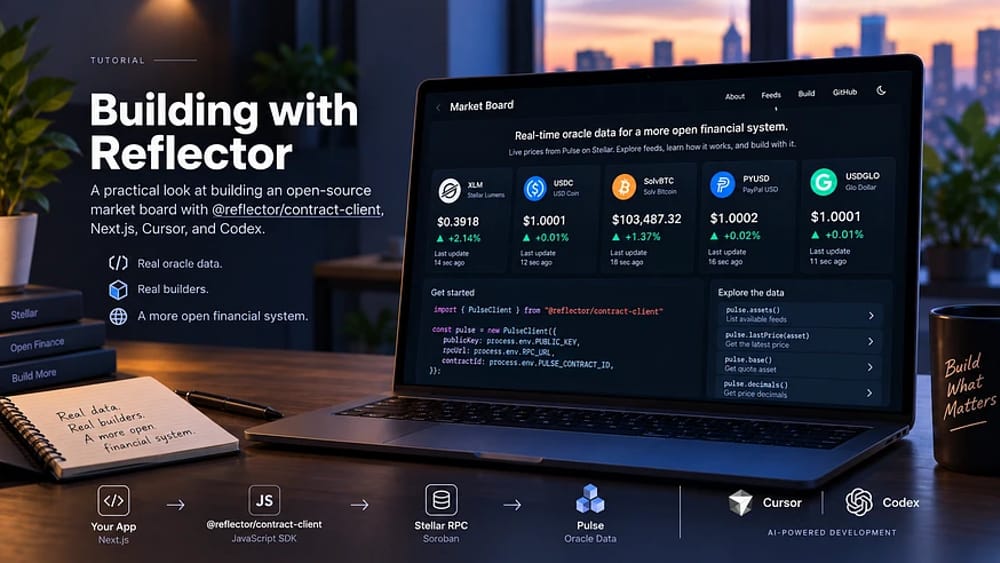
A developer's guide to integrating Reflector's JavaScript oracle client into a Next.js application. Covers asset discovery, decimal scaling, bigint handling, and freshness tracking with a working reference example you can clone and modify.
DeFi, payments, tokenization, Soroban, governance, and project launches — curated daily from publications, project blogs, and community channels across the Stellar blockchain ecosystem.
A developer's guide to integrating Reflector's JavaScript oracle client into a Next.js application. Covers asset discovery, decimal scaling, bigint handling, and freshness tracking with a working reference example you can clone and modify.
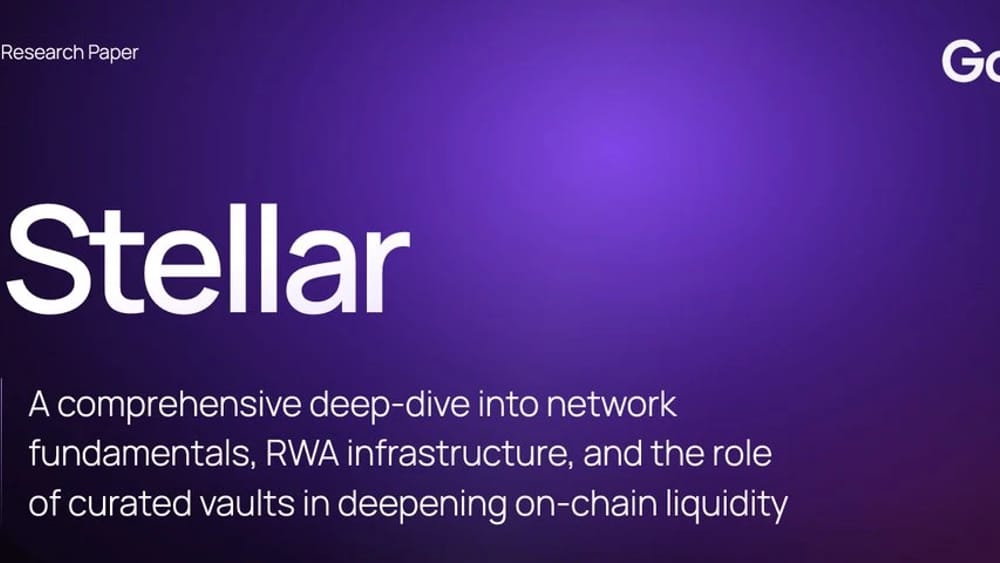
Stellar's Q3 2026 on-chain RWA market crossed $4 billion, growing four times faster than the broader tokenization market. A technical overview from Gami Labs examines why Stellar's architecture—deterministic finality, protocol-level asset controls, near-zero fees, Soroban smart contracts—has positioned it as the institutional venue for regulated real-world assets.
XOXNO selected RedStone Finance to provide price feeds for its Stellar lending protocol, covering tokenized assets, government bonds, stablecoins, and crypto. The integration achieved day-one support for USDT0's mainnet launch and was optimized for Stellar's constraints: XOXNO reads directly from RedStone's contract storage to reduce cross-contract calls, allowing complex strategies within per-transaction CPU and memory limits.
Arcane and Predicate are building complementary infrastructure for private financial applications on Stellar. The piece explains how these platforms handle compliance before, during, and after private transactions: pre-screening participants, applying policy over time, responding when risk changes, and providing governed access to confidential evidence when investigation or disclosure is required.
STBL advances three major workstreams: RXUSD moves into final stages with 18,500+ pre-registrations and finalized smart contracts ahead of mainnet launch, iBENJI collateral integration deploys next week to expand USST utility with Franklin Templeton tokenized assets, and Solana integration enters security audit.
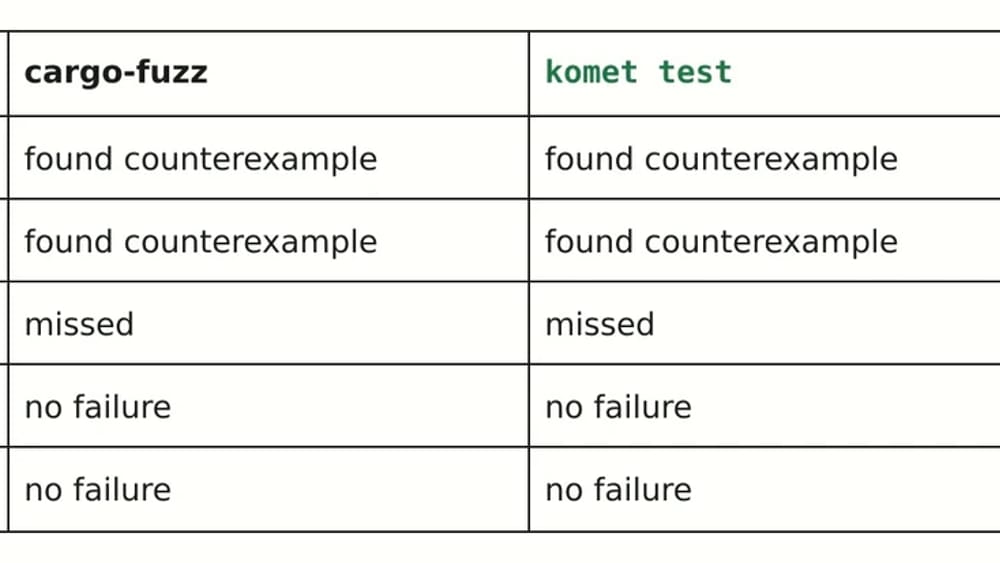
Certora compared three Soroban security tools—Sunbeam (formal verifier), Komet (hybrid fuzzing/proving), and cargo-fuzz—on detecting bugs and proving correctness. Fuzzing found obvious failures quickly but missed rare edge cases. Sunbeam detected all bugs and proved correct code was mathematically sound.
On August 25, an attacker exploited a Comet smart contract bug that failed to verify token inputs in swap functions, extracting 717,518 USDC from the BLND-USDC liquidity pool. Community white hats quickly recovered 190k USDC and 23M BLND before copycat attacks. Script3 is leading recovery and remediation efforts; Blend protocol lending continues but backstop deposits are at risk due to the non-upgradeable LP token.
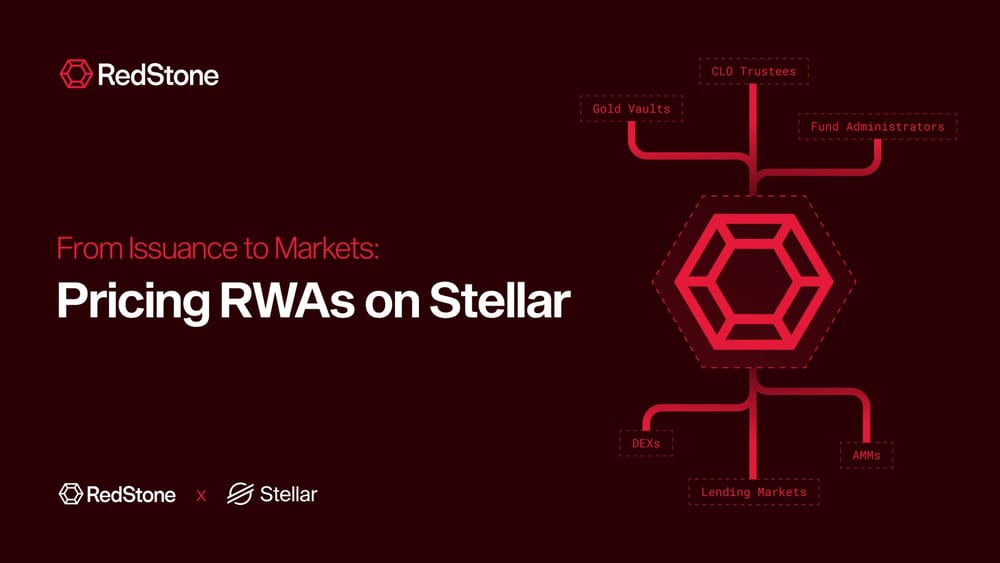
Stellar's RWA sector has quadrupled to $3B in 7 months, but DeFi integration stalled on one bottleneck: pricing. Traditional crypto relies on continuous 24/7 trading for price feeds, while RWAs trade intermittently and require cross-chain data pipelines. SEP-40 standard and RedStone's oracle infrastructure solve this, enabling RWAs to flow into lending and trading protocols.
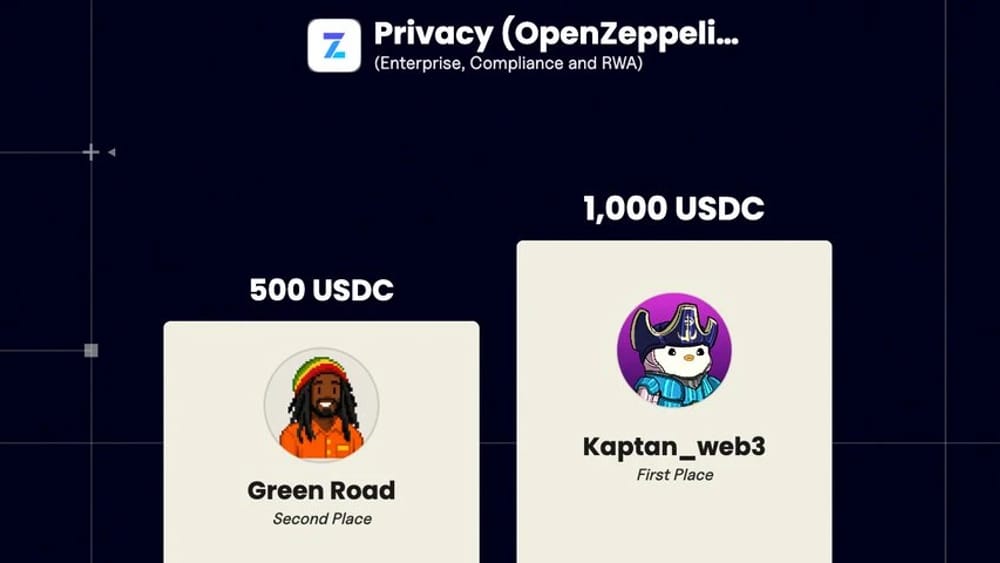
A Trustless Work engineer took second place at Stellar Summit for a testnet POC combining Confidential Tokens with escrow infrastructure. Green Road emerged as a personal learning project exploring privacy-preserving payment mechanics — specifically, what balances can hide versus what relationships remain visible. The work surfaces important trade-offs around selective disclosure and transaction correlation that future privacy-escrow designs must address.
Trustless Work joins SCF's official Integration List, becoming an official building block for ecosystem teams.
Stellar Protocol 28, called Adapter, will upgrade testnet August 27 and mainnet September 16, 2026. Developers must update SDKs, validators must install Stellar Core and enable NTP synchronization, and infrastructure operators must deploy new releases. CAP-83, CAP-85, and CAP-86 introduce empty transaction set consensus, external smart contract executables, and efficient contract data structures.
XOXNO's team hit Soroban memory limits while scaling complex DeFi strategies. Their debugging journey identified that cross-contract calls were consuming full 1 MB of linear memory per call—a transient cost never credited back. A protocol-level fix refunding VM memory at teardown is coming in an upgrade; meanwhile, Reflector's compile flag optimization provides immediate relief, unlocking more complex on-chain flows for the ecosystem.
RedStone provides USDY with a price feed and SEP-40 contract, making it collateral-eligible on Stellar's lending protocols. The yield-bearing stablecoin, backed by U.S. Treasuries, joins Stellar's growing RWA ecosystem—now $2.96B in tokenized assets, including sovereign debt and Bitcoin products.
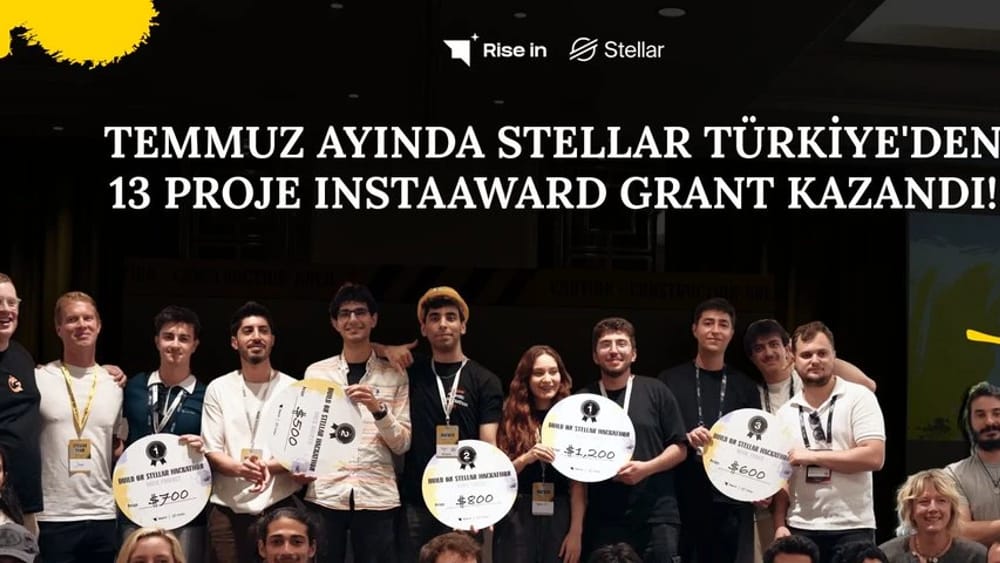
Türkiye's Stellar ecosystem shipped 13 projects after winning InstAward grants in July: walletless payment solutions (Lumenia, PayTag), DeFi infrastructure (Asteria, Halka, Verdict), verification tools (Sorofy), and identity systems (A-Identity). Across Soroban smart contracts, each addresses a specific ecosystem gap.
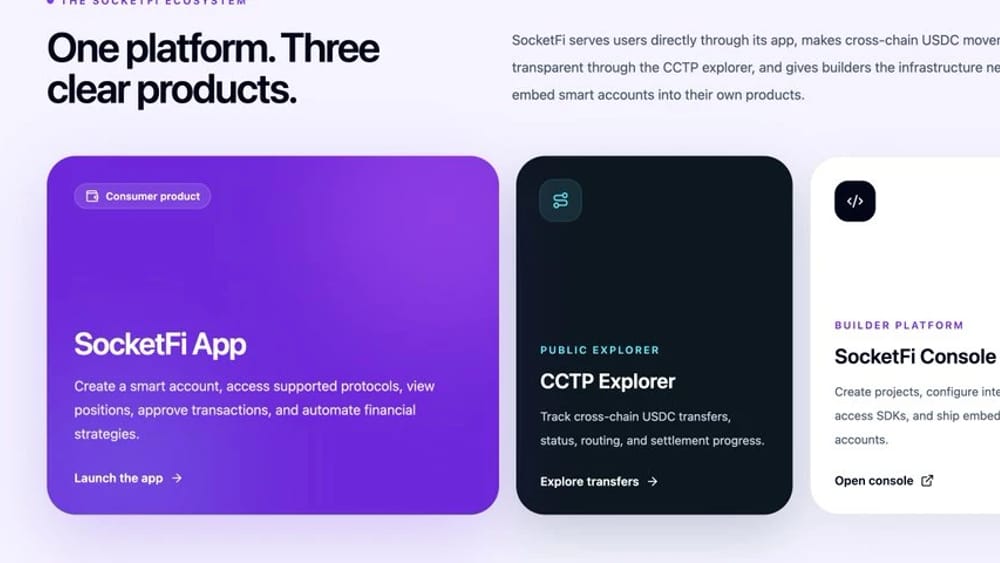
SocketFi Smart Accounts v2 launches with multi-wallet onboarding (passkeys, Stellar Wallet Kit, EVM wallets), embedded USDC bridge via Circle CCTP, and DeFi integrations (Aquarius, Blend). New automation features enable portfolio rebalancing, dollar-cost averaging, and scheduled disbursements. EVM users can now control Stellar smart accounts without creating a traditional Stellar keypair.
Institutional finance requires privacy on-chain: traders can't broadcast positions, strategies, or counterparties without inviting front-running. OpenZeppelin examines three approaches—private permissioned networks like Canton, confidential tokens using FHE or zero-knowledge proofs, and privacy overlays on existing chains—each with different tradeoffs in complexity, composability, and regulatory auditability.
Zarf is a privacy-preserving token distribution protocol on Stellar that lets users claim airdrops and vesting payments using only an email address. Founded by @denizb471 (zero-knowledge cryptography) and @yamancan (product/growth), the project uses Soroban smart contracts and zero-knowledge proofs to eliminate wallet requirements, making blockchain onboarding as familiar as email login. Zarf secured Stellar Community Fund backing to build out its infrastructure.
Melike Keçelioğlu's Vestellar is a native token streaming and vesting protocol built on Stellar, designed to automate investor vesting schedules, contributor payments, ecosystem grants, and payroll through programmable smart contracts. Her background in traditional finance shaped the focus on making digital asset distribution programmable, transparent, and capital efficient, addressing a need she observed across every blockchain ecosystem. The MVP was built and funded during Rise In's Stellar InstAward program.
The DTCC's move to bring DTC-custodied assets onto a public blockchain validates Stellar's five-year institutional infrastructure play. With $2.92B in RWAs from regulated issuers, $842.8M in stablecoins, and DeFi protocols like Blend, Stellar has quietly built the financial infrastructure Wall Street needed.
Nethermind ships Stellar Private Payments, a privacy protocol combining confidential transfers with compliance safeguards. Identity-level access controls enforce KYC-gated participation and account-level freeze capability, while selective disclosure lets users prove ownership to auditors. Live on testnet, open source, featured on PSE's Private Transfers Dashboard.
Lusty Finance is evolving an options protocol on Stellar from a working testnet version to a fully trustless architecture on mainnet. With Stellar Community Fund backing, the team is migrating collateral, settlement, and premium distribution from backend servers to Soroban smart contracts, using Reflector oracles for price feeds. Already live on testnet with 211 connected wallets and $1,500 in real user premiums paid.
Alula's governance queue forces market-parameter changes to wait out a fixed period, giving institutional RWA borrowers time to rebalance positions before collateral requirements tighten or borrowing capacity shrinks.
LumosCore is preparing to exit beta with major platform upgrades. Cross-Chain v3 replaces traditional lock-and-vault bridges with liquidity routing through existing pools. Automatic Rewards will autonomously distribute LUMOS to liquidity providers on preset schedules. The Soroban Verification Layer anchors all critical operations to Stellar's blockchain for transparent, verifiable settlement.