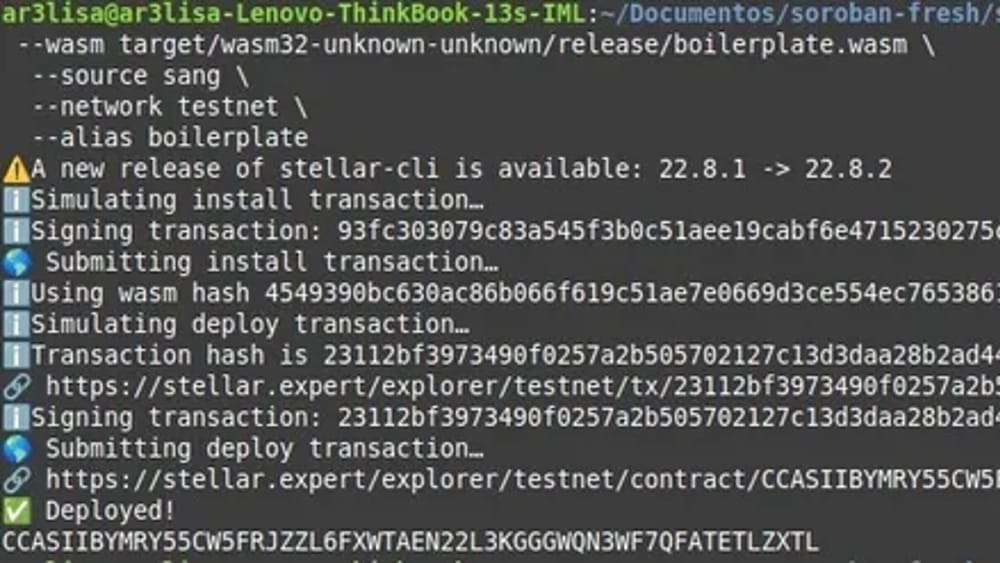
Guide to integration testing best practices for Soroban smart contracts, covering realistic local network setup, end-to-end user flows, state validation, edge case testing, and CI automation with practical examples.

DeFi, payments, tokenization, Soroban, governance, and project launches — curated daily from publications, project blogs, and community channels across the Stellar blockchain ecosystem.
Guide to integration testing best practices for Soroban smart contracts, covering realistic local network setup, end-to-end user flows, state validation, edge case testing, and CI automation with practical examples.

Stellar completed a mainnet vote to launch Protocol 23, introducing eight Core Advancement Protocols that enable parallel smart contract execution, faster transaction processing, and improved scalability. The upgrade comes as Stellar's DeFi ecosystem surges with institutional adoption, including Franklin Templeton's BENJI fund and Circle's USDC.
The Stellar Development Foundation announced that all SDF projects are unaffected by a major NPM supply chain attack discovered on September 8, 2025. SDF conducted audits and found no malicious packages in their projects, while providing guidance to the broader Stellar ecosystem on how to protect against the attack.
Stellar Development Foundation details major upgrades to Stellar Core aimed at achieving 5000 TPS and reducing block time to 2.5 seconds. The improvements parallelize transaction dissemination, consensus voting, and block execution across separate threads, with v22.1.0 already deployed and showing significant main thread pressure reduction.
Stellar Protocol 23, named Whisk, introduces unified events and parallel transaction processing to improve developer experience and network scalability. The protocol launches September 3rd and includes fee reductions, state archival foundational work, and configurable network parameters.
A comprehensive guide to 'vibe coding'—using AI and large language models to assist with software development. The article covers best practices for prompting, providing context to AI models, and recommends tools including AI code editors, various LLMs, and MCP servers to enhance the development workflow.
A comprehensive tutorial on building a Stellar smart contract that uses Reflector oracle to create a EUR price prediction market. The guide covers contract initialization, oracle integration, storage patterns, token transfers, and verification logic using Soroban.
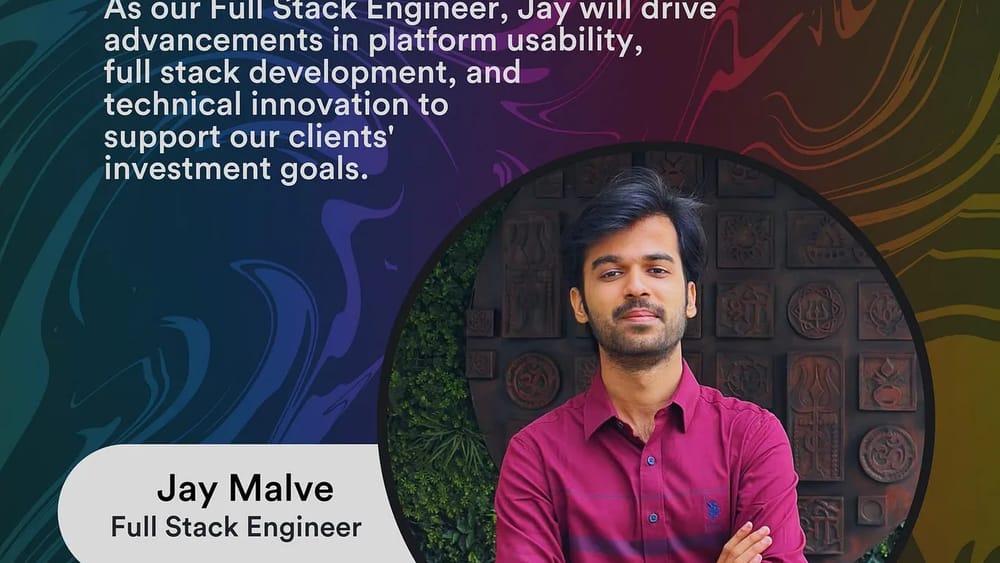
Normal announces the hiring of full-stack engineer Jay Malve to bolster its team ahead of the Normal Protocol's launch on the Stellar blockchain mainnet. Jay, a hackathon winner with blockchain experience from ETH Denver, will enhance platform usability and development. The protocol offers custom crypto indexes, trading of top 200 cryptocurrencies, and DeFi features like lending and borrowing.
Stellar has launched RPC integration with a ledger data lake, enabling developers to access any historical ledger from genesis to present through RPC queries. The feature uses SEP-0054 standardized format and can be accessed via public data lakes or self-hosted using Galexie, with the getLedgers endpoint now supporting full historical data retrieval.
Trustless Work launches Vibe Coding, a new documentation section that provides AI-ready prompts and global context for developers to build escrow-powered applications using AI tools like GPT-5 and Claude. The guide includes step-by-step workflows, coding standards, and verification checklists to ensure production-ready code.
Protocol 23 introduces CAP-67 events that can emit data for both new and historical ledgers. Operators must enable two new core flags—EMIT_CLASSIC_EVENTS and BACKFILL_STELLAR_ASSET_EVENTS—to build a complete unified events feed covering classic operations and Soroban transactions.
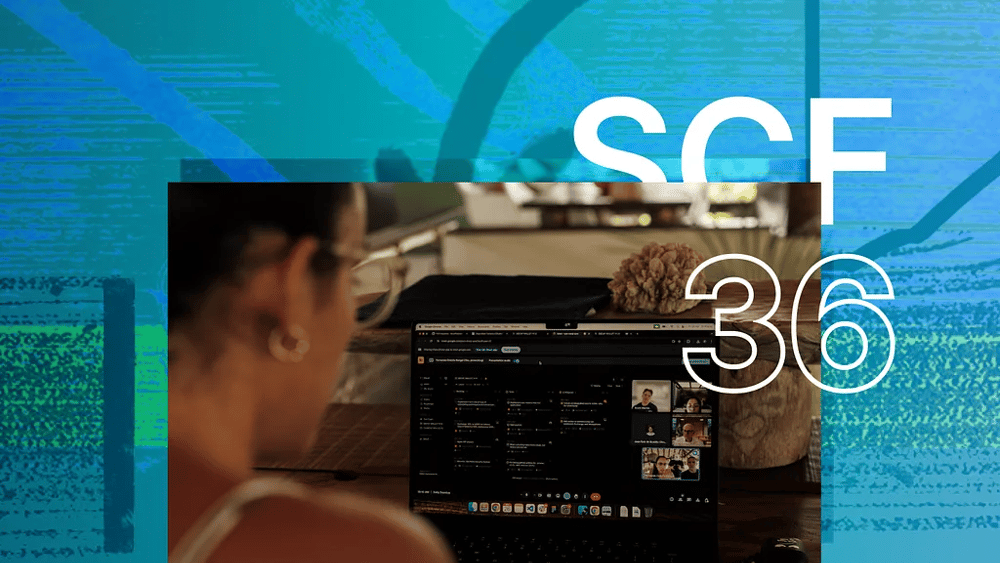
The Stellar Community Fund (SCF) #36 round received 53 submissions and awarded $2,088,654 worth of XLM to 23 innovative projects. Funded initiatives span stablecoin payments, DeFi infrastructure, cross-border remittances, compliance tools, and Soroban smart contract enhancements. Highlights include Stables, Splyce Finance, and Uniblock, showcasing the ecosystem's growing sophistication.
SDF plans to scale Stellar Core to 5000 TPS in 2025 through Protocol 23, parallel execution, decoupled consensus, aggressive caching, and improved benchmarkin…
OnlyDust launches Wave 2 with 7 open spikes focused on indexing escrow activity on Stellar and Soroban using SubQuery, The Graph, and Goldsky. The initiative …
CAP-67 introduces a unified event stream for tracking all token value movements on Stellar, including transfers, mints, burns, clawbacks, and fees across both…
Mercury, a Stellar ecosystem runtime platform, is shifting to a Light Client deployment model that unbundles data sourcing, execution, and delivery into modular, open-source components. This redesign reduces operational overhead while preserving Mercury's Zephyr and Retroshades runtime technology and enabling third-party infrastructure operators to run Mercury services independently.
A developer shares her firsthand experience winning a track at Casa Builder México 2025 hackathon, building a Stellar/Soroban smart contract project with a mixed Web2/Web3 team despite having no prior Rust or Stellar experience. She details the technical stack, timeline, challenges, and key lessons learned about participating in hackathons.
This article provides a deep technical exploration of Federated Byzantine Agreement (FBA), the consensus mechanism used by Stellar and Ripple, contrasting it with Proof-of-Work and Proof-of-Stake. It examines FBA's architecture, the philosophical differences between Stellar's bottom-up approach and Ripple's managed model, discusses inherent risks like bootstrapping trust and quorum centralization, and explores emerging applications beyond cryptocurrency.
The Stellar Development Foundation outlines its 2025 scalability roadmap to increase Stellar Core's theoretical throughput to 5000 TPS through five key initia…
The Stellar Development Foundation outlines its 2025 roadmap progress toward achieving 5000 TPS and 2.5-second block times through major Stellar Core upgrades…
Stellar and BAF concluded a Latin American hackathon with 136 hackers from 6 countries building 27 projects. Winners included Pacto (P2P stablecoin exchange),…
The Stellar Development Foundation outlines its framework for evaluating and selecting validator nodes to trust in its quorum configuration, based on eight key dimensions including security practices, geographic diversity, and organizational reliability. The article serves as both a transparency report on SDF's validator trust decisions and a blueprint for other network operators building their own validator configurations.
Trustless Work participated in the Stellar Hackathon in Mexico City, hosted by the Blockchain Acceleration Foundation. Builders from five countries, including…
The Stellar Development Foundation outlines its 2025 roadmap goal to double Tier 1 network resilience from 7 to 13 organizations, increasing fault tolerance f…
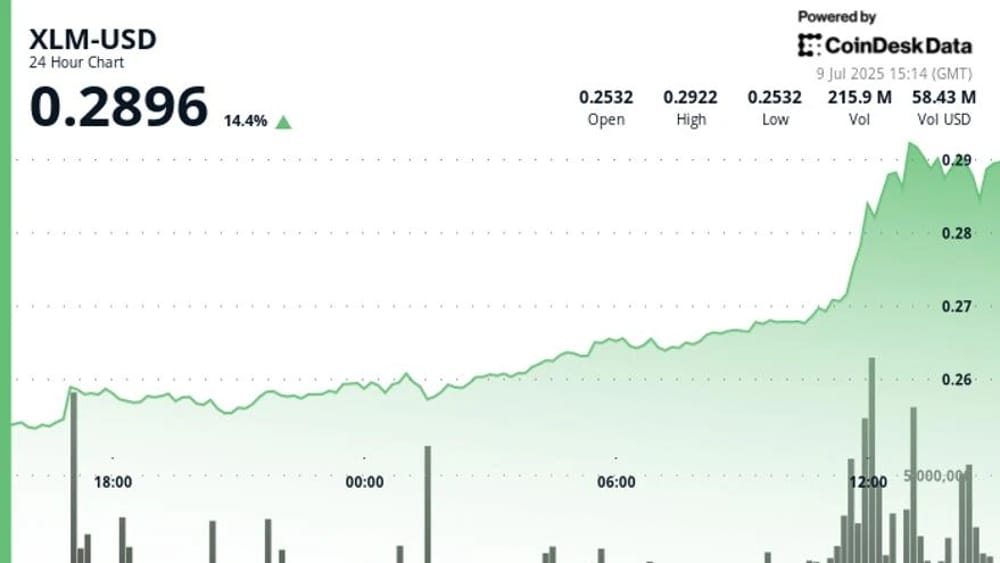
Stellar Lumens surged 14.3% to $0.293 on institutional volume following the release of Stellar Core v23.0.0rc2, though the rally reversed sharply to $0.2896 as short-term traders exited positions.
June 2025 marked significant growth for the Stellar ecosystem with major European engagement, landmark DeFi product launches, and powerful developer tools. Key highlights include Berlin and Istanbul blockchain weeks, the launch of Beans Earn with Defindex, PayPal's intent to bring PYUSD to Stellar, and new developer infrastructure from OpenZeppelin and Creit Tech.
Trustless Work is participating in OnlyDust OS Wave #1 from June 26 to July 6, offering high-impact tasks for contributors preparing for mainnet launch. Tasks include escrow viewer refactors, wallet analytics, smart contract optimizations, passkey integration, and backoffice enhancements on the Stellar blockchain. Contributors can join via OnlyDust to work on real smart contracts, UI features, and dev tools for the stablecoin economy.
Trustless Work has released an SDK MCP (Model Context Protocol) integration for Cursor, enabling AI-assisted development of escrow flows. The MCP allows developers to scaffold escrow integrations directly from their editor with autocomplete, type safety, and reduced friction.