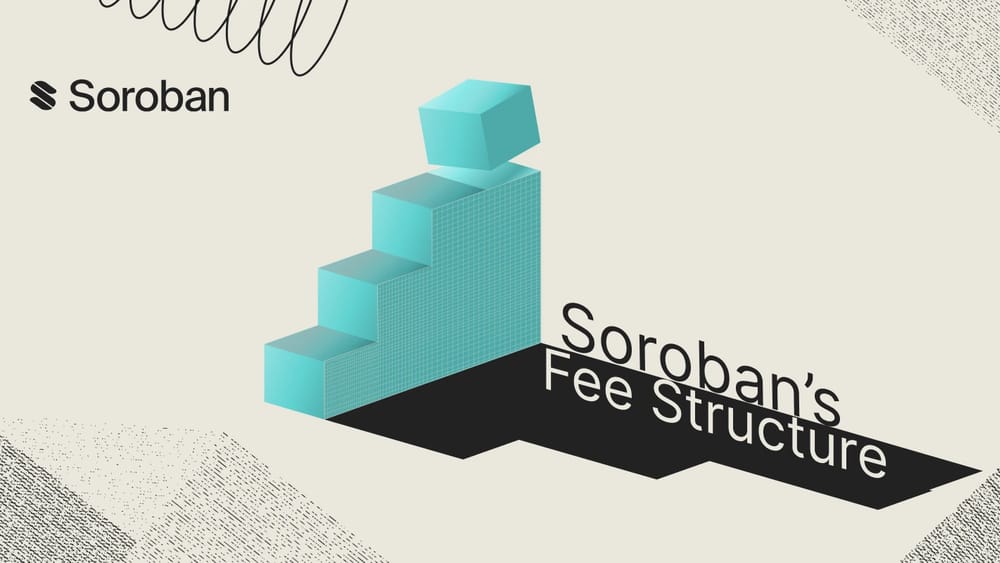
Soroban's fee structure uses granular resource metering to price compute, memory, and storage independently, enabling more efficient block utilization and lower validator costs than traditional gas-based systems like Ethereum's.
DeFi, payments, tokenization, Soroban, governance, and project launches — curated daily from publications, project blogs, and community channels across the Stellar blockchain ecosystem.
Soroban's fee structure uses granular resource metering to price compute, memory, and storage independently, enabling more efficient block utilization and lower validator costs than traditional gas-based systems like Ethereum's.
The Stellar Development Foundation outlines seven current and upcoming developer programs for Soroban, ranging from content bounties and hackathons to educational challenges and coding puzzles, with awards up to $150,000 XLM for builders creating end-to-end products.
This article explains the Stellar Consensus Protocol (SCP), a Proof-of-Agreement mechanism that enables Stellar to achieve fast, energy-efficient consensus without mining. It compares SCP to other consensus mechanisms like Proof-of-Work and Proof-of-Stake, and details how Stellar's transparent, node-based validation process works.
An educational overview of blockchain fundamentals, explaining how distributed ledgers work, their advantages over centralized databases, and comparisons of major blockchain platforms including Bitcoin, Ethereum, and Stellar.
A comprehensive guide to Rust development for smart contracts on Soroban, covering setup, language advantages over Solidity, and resources from the Stellar Development Foundation for learning and building.
The Stellar Development Foundation released its Q2 2023 report highlighting major progress on Soroban smart contracts, Anchor Platform support for deposits/withdrawals, Hubble analytics, and ecosystem growth including Franklin Templeton's $270M fund and MoneyGram's 1-year anniversary on Stellar.
This article explores the various consensus mechanisms available in Hyperledger Fabric, including PBFT, Kafka, Raft, Solo, and IBFT. It details their characteristics, use cases, and how they integrate with Fabric's architecture like ordering services and endorsement policies. A brief mention of Stellar Consensus Protocol (SCP) appears in the context of external consensus integration.
Soroban implements state expiration to address blockchain state bloat, becoming the first blockchain to deploy this solution at mainnet launch. The design includes an Expired State Store, two storage types (Temporary and Persistent), and a rent model to prioritize important data and improve network scalability.
The Stellar Development Foundation launched Hubble, a BigQuery-based analytics dataset offering complete historical records of the Stellar blockchain. Hubble enables complex data analysis without maintaining full history databases, supporting large-scale computing and historical applications previously difficult to implement.
Soroban Preview 10 introduces new State Expiration logic to address blockchain bloat issues, along with Rust SDK changes and clearer smart contract limits. July focused on refactors rather than new features, including rethinking governance token distribution. A new Stable Liquidity Pools contract for stablecoins is in development for future deployment.
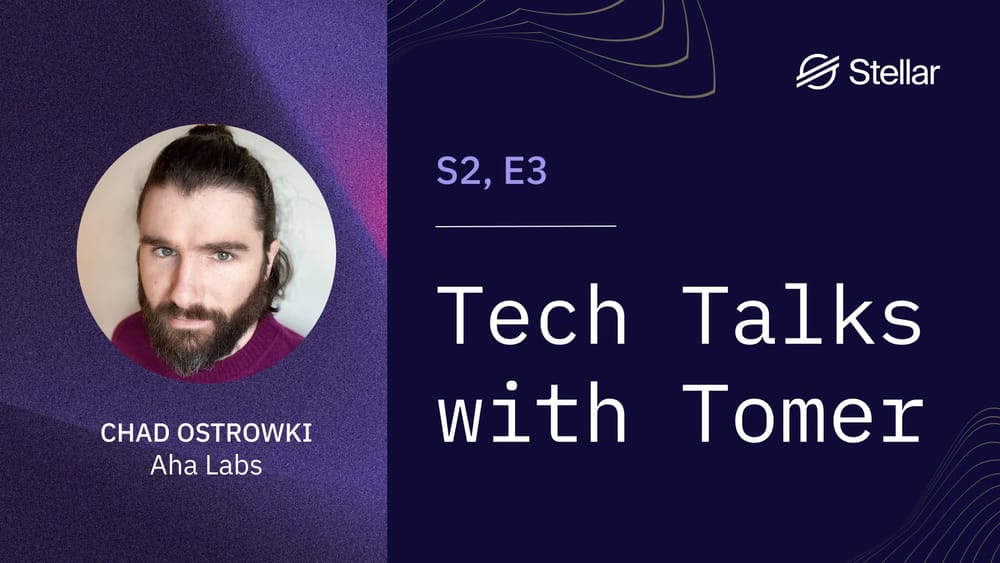
Tech Talks with Tomer Episode 3 Season 2 features Chad Ostrowski from Aha Labs discussing smart contract development across NEAR, Soroban, and CosmWasm. The video series hosted by Tomer Weller, VP of Product at @StellarOrg, explores innovations in blockchain engineering.
Stellar Development Foundation proposes limiting transaction submission to one per source account per ledger to improve network scalability and safety ahead of Soroban support in Protocol 20. Channel accounts remain the recommended solution for high-throughput applications.
Soroban, Stellar's native smart contract platform, learns from Ethereum's design mistakes to offer better developer experience. Key improvements include native XLM token integration without wrapping, built-in event emissions, re-entrancy attack prevention, checksummed addresses, and single-transaction token transfers.
SCF Kickstart bootcamp concluded its first 2023 cohort, supporting 30 Web3 startups building on Stellar and Soroban. CashAbroad won first place with $15,000 XLM for its LATAM cross-border payment platform, followed by Ripe and uils as runners-up.
Soroban offers developers a compelling alternative to Ethereum and Solana through inclusive technology choices like WebAssembly and Rust, a greenfield ecosystem, global financial reach with diverse stablecoins, superior network reliability, and a streamlined developer experience.
The Stellar Community Fund published guidance on three best practices for successful SCF applications: demonstrate technical expertise with Soroban/Stellar, prove ecosystem impact, and define clear 3-month roadmaps with specific deliverables.
Tomer Weller from Stellar Development Foundation interviews Sergey Gorbunov, co-founder of Axelar, to discuss cross-chain communication protocols and how both teams approach interoperability challenges for developers.
The Stellar Development Foundation released its Q1 2023 report, highlighting progress on Soroban smart contracts, Stellar Core scaling improvements, Freighter wallet enhancements, and the launch of the Soroban Adoption Fund and Stellar Asset Sandbox to support developer adoption.
Elliot Voris has joined the Stellar Development Foundation as a DevRel team member after years of community contributions. He discovered Stellar through Stellar Quest during COVID and has since become a key contributor to community education, Soroban documentation, and developer tools.
Christian Rogobete, a key Stellar SDK contributor known as Soneso, has developed and maintains iOS, Flutter, and PHP SDKs while working on an AssemblyScript Soroban SDK. His work aims to make blockchain development more accessible to developers across multiple programming languages.
The Stellar Newsletter highlights the Soroban Adoption Fund with $100M in opportunities, including a $10M Stellar Community Fund program for Soroban projects and developer initiatives like Sorobanathon. It covers UNHCR's nomination for blockchain impact award using Stellar for aid in Ukraine, partnerships like Beans App with MoneyGram, and technical updates on Pull Mode and Ubuntu upgrades. Community events, policy priorities, and developer resources are also featured.
Synced's February 2023 development log details progress on dashboard integration and familiarity with Stellar's Soroban platform via Hacka-Soroban-athon. March aims include adding description and chat features to dashboards, completing web redesign, and releasing to live app. Additional plans involve migrating from MongoDB.
The Stellar Development Foundation outlines three active programs under the $100M Soroban Adoption Fund: Stellar Quest Live Series 6 for competitive learning, Sorobanathon: Equinox for experimentation and content creation, and the Stellar Community Fund for building full products. Each targets different developer skill levels with varying award structures.
This article explains Pull Mode, a feature introduced in Stellar Core releases 19.4.0 and mandated in 19.7.0 that reduces redundant transaction broadcasting between validators. By having validators request transaction hashes before sending full transactions, Pull Mode decreased computational overhead and increased maximum TPS by 72% in testing.
The Stellar Development Foundation announced the deprecation of stellar-core Ubuntu 18.04 package support in favor of Ubuntu 22.04 LTS, requiring users to either upgrade, switch to Docker images, or manually compile the software.
The Stellar Development Foundation and Cheesecake Labs showcased 14 Soroban smart contract projects from a week-long internal hackathon, including a naming service, DAO governance tool, recurring payments contract, and NFT implementation. The projects demonstrate Soroban's flexibility and are open for community collaboration ahead of mainnet launch.