SDF validator nodes went offline around 1 am PDT, halting transaction validation. However, the Stellar network remained operational because other organizations' nodes continued functioning, demonstrating the network's decentralization.
DeFi, payments, tokenization, Soroban, governance, and project launches — curated daily from publications, project blogs, and community channels across the Stellar blockchain ecosystem.
SDF validator nodes went offline around 1 am PDT, halting transaction validation. However, the Stellar network remained operational because other organizations' nodes continued functioning, demonstrating the network's decentralization.
Stellar Development Foundation's validator nodes went offline on Tuesday, temporarily halting transaction processing. The Horizon API was restored, but SDF en…
SDF's validator nodes went offline for 10 hours on April 10, 2021, but the Stellar network continued operating normally with other validators. The issue was t…
Stellar Development Foundation's validator nodes and public Horizon API temporarily went offline for 10+ hours on April 6, 2021, but the decentralized Stellar…
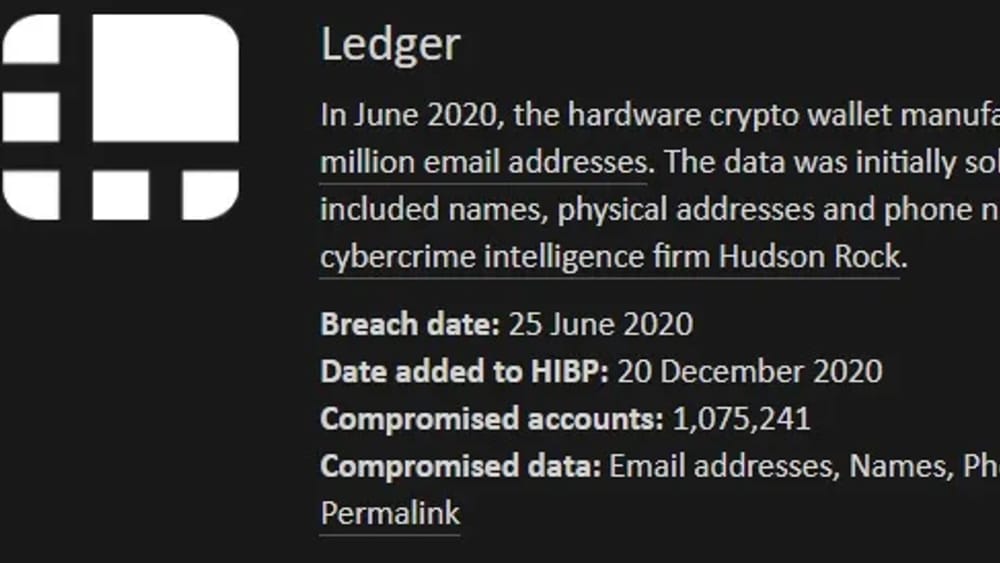
The article details a 'Stellar Staking Marathon' email-phishing scam targeting Stellar (XLM) users, linked to the 2020 Ledger.com database breach that exposed over 1 million emails and personal data of 270,000 individuals. Stellarscam.report connects this to memo-phishing bots on the Stellar Network, noting pattern changes coinciding with the breach. Users are urged to check haveibeenpwned.com and report scams.
Stellar Development Foundation disclosed a phishing attack on November 29 targeting community members with fake emails impersonating SDF. The attackers compromised third-party email service API keys but did not access Stellar network infrastructure or user accounts; SDF emphasized it never requests secret keys.
SDF redesigned the Stellar Account Viewer with improved security features, hardware wallet support, and a new browser wallet called Freighter. The updated AV now emphasizes key management best practices and offers a better mobile experience.
Stellar ecosystem leaders debate custodial vs. non-custodial key management approaches in a roundtable discussion, exploring how CAP-27 and SEP-30 support different solutions and which the SDF should prioritize for financial inclusion and adoption.
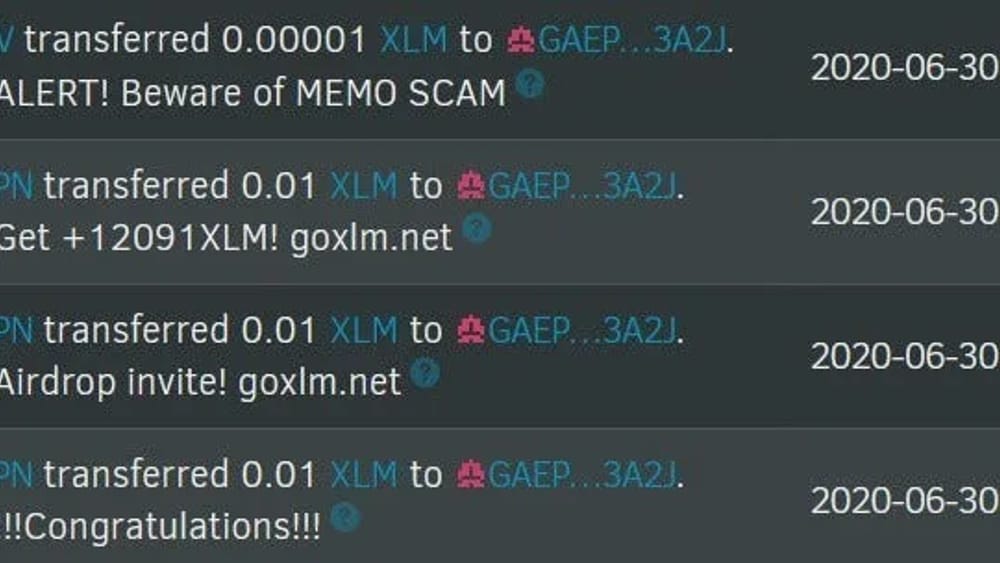
The article recounts the origin of Stellarscam.report, created to combat 'memo-phishing' scams on the Stellar Network where scammers send malicious memos with tiny XLM amounts to trick users into revealing secret keys. The author, frustrated by repeated scam reports on r/Stellar, developed a bot in mid-May 2020 to automatically send warning transactions to victims. Monthly stats show the bot countered tens of thousands of scam transactions, highlighting ongoing community efforts against persistent fraud.
Stellar Development Foundation announced that Protocol 14 will be skipped in favor of Protocol 15 due to a critical bug discovered during testnet testing. The public network upgrade vote has been rescheduled to November 23, 2020, with detailed upgrade instructions provided for validators, Horizon operators, and SDK users.
SEP-30 enables user-friendly non-custodial wallets by eliminating recovery phrases and passwords. Users log in with just a phone number while maintaining full account control through device keys and distributed recovery servers. Vesseo, a USD savings app on Stellar, demonstrates this approach in production.
Part two of a key management series explains how Stellar accounts work, covering public/secret keys, master keys, multi-signature capabilities, and common wallet strategies. The post introduces SEP-30 as a better approach to user-friendly key management and account recovery.
Ledger Wallet offers a secure way to buy over 80 cryptocurrencies, including Stellar, directly into users' non-custodial hardware wallets using fiat or crypto. It aggregates providers like Moonpay and Ramp for competitive pricing and ensures self-custody from the start. The feature emphasizes ease-of-use, clear transaction signing, and hardware-level security to prevent common risks associated with centralized exchanges.
The Stellar Foundation partnered with blockchain forensics firm Elliptic to help Stellar-based businesses screen transactions for money laundering, sanctions, and compliance risks. The service is optional for businesses; XLM wallet users won't be automatically surveilled. Stellar argues regulatory compliance and privacy can coexist.
Keybase and Stellar's 2 billion XLM airdrop ended early after attracting massive spam and bot activity. The program distributed only 300 million XLM instead of the planned amount, as fraudsters exploited verification methods to claim free tokens at scale.
Stellar Development Foundation released stellar-core v11.2 with automatic quorum configuration and a quorum intersection checker to help validators manage Byzantine Agreement Systems more easily and safely.
Stellar network halted for nearly two hours Wednesday when enough validator nodes stopped, preventing consensus. The incident highlighted risks of rapid decentralization, though SDF nodes remained operational.
Stellar suffered a critical inflation bug in April 2017 where an attacker exploited the merge function to create 2.2 billion XLM (worth ~$10M at the time). The SDF patched the bug, disclosed it in release notes, and burned equivalent XLM from reserves to prevent dilution.
A hacker stole over $400,000 in Stellar lumens by compromising BlackWallet's DNS server, redirecting deposits of 20+ lumens to another wallet. The attacker quickly moved most funds out, with some sent to Bittrex.
The Stellar Foundation released details on its new Stellar Consensus Protocol, based on federated Byzantine agreement, designed to replace the existing consensus mechanism. The protocol has been stress-tested to handle 100 million accounts and hundreds of transactions per second, with deployment targeted for summer.
A ledger fork in the Stellar network sparked debate over the Ripple consensus protocol's safety. Stellar Development Foundation attributed the incident to protocol flaws, while Ripple Labs disputed the claims, arguing the issue stemmed from Stellar's modifications to the code.
Stellar experienced a ledger fork due to weaknesses in its Ripple-based consensus algorithm. The network temporarily switched to a single validator node and is prioritizing development of a new provably correct consensus system to prevent future forks and double-spend risks.
Stellar Development Foundation removed a partial payments feature from the protocol after discovering it could cause fund loss if anchors weren't aware of the DeliveredAmount field requirement. The legacy feature has been eliminated and all known anchors were notified.
Stellar network experienced a 16-hour outage on September 20, 2014, caused by validator nodes running out of RAM, halting consensus and all transactions. The foundation addressed communication gaps and began work on scalability improvements to prevent recurrence.