The Stellar public network successfully upgraded to Protocol 13, introducing new features like fee-bump transactions and fine-grained asset authorization. Developers must update their software to avoid compatibility errors.
DeFi, payments, tokenization, Soroban, governance, and project launches — curated daily from publications, project blogs, and community channels across the Stellar blockchain ecosystem.
The Stellar public network successfully upgraded to Protocol 13, introducing new features like fee-bump transactions and fine-grained asset authorization. Developers must update their software to avoid compatibility errors.

Protocol 13 introduces fee-bump transactions to the Stellar network, allowing users to increase transaction fees without requiring new signatures from all parties. This solves the problem of pre-signed transactions becoming unexecutable when network fees rise unexpectedly.
Stellar Core Protocol 13 introduces three major features: fee bumps for flexible transaction fee management, fine-grained asset authorization for regulated assets, and multiplexed accounts with built-in memos for custodial services. The public network will vote to upgrade on June 18, requiring all ecosystem participants to update their software.
The Stellar Development Foundation released a daily-updated analytics dataset on Google BigQuery, enabling 10-100x faster queries across the entire history of Stellar network transactions. The dataset includes accounts, ledgers, operations, trades, and other ledger state information, with free trial access available through Google Cloud.
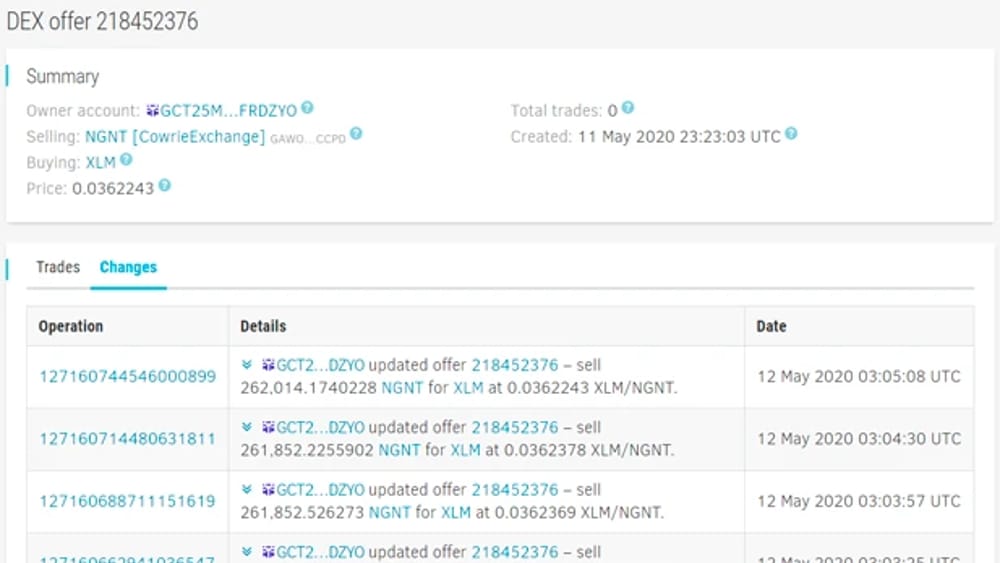
Stellar Expert rebuilt its infrastructure from scratch to handle growth beyond 1 billion operations on the network. New features include a detailed DEX offer explorer with modification history, night mode interface, account activity indexing, a live operation stream that auto-pauses on user scroll, and a new asset rating API. The update reflects years of backend optimization work addressing database scaling challenges.
Stellar Protocol 13 upgrade is coming to mainnet on 06/18/2020. Developers must update Horizon, SDKs, and custom integrations before the network votes to upgrade, or their software will break.
The Stellar Development Foundation's web products team is seeking community feedback on a redesigned version of the Stellar developer documentation and API reference. The new docs feature improved navigation, modular learning paths, and updated content while maintaining existing functionality.
The Stellar Development Foundation reflects on why open source is the right model for building networks, highlighting documentation, transparency, collaboration, and diversity as key pillars that enable Stellar to thrive across borders and time zones.
The Stellar Development Foundation released its Q1 2020 quarterly report, highlighting progress on strategic growth pillars including Horizon API improvements, policy advocacy, marketing initiatives, and a strategic investment in DSTOQ to expand financial access in emerging markets.
Multisig account transactions involve complex threshold matching across signers and operations. Stellar Expert's tx-signers-inspector library automatically discovers eligible signers, calculates required thresholds, and detects excessive signatures—turning manual verification into a few API calls.
Stellar Development Foundation revamped Stellar.org with a new project directory, updated SDF mandate detailing treasury deployment, and lumen supply metrics documentation to improve ecosystem transparency and support for builders.
Stellar.org's new homepage features runnable code samples for network features like payments and asset issuance. To handle testnet resets every 3 months, the team built an automated script that checks for account existence and recreates necessary accounts, plus a function to return unused testnet lumens to Friendbot to prevent resource depletion.
The Stellar Winter Roundup 2019 recaps key achievements and events from December through October, including ecosystem expansion, the Meridian conference, lumen distribution updates, and new partnerships. Highlights feature SDF's new mandate, Horizon and Core releases, Stellar Community Fund voting, and integrations like Travala.com and BitGo support for XLM. It also announces new hires and job opportunities at SDF.
Stellar Development Foundation reflects on 2019 achievements: team grew from 11 to 56 employees, Stellar accounts doubled to 4.1M, protocol upgrades improved capacity and fairness, and ecosystem matured with stronger validator infrastructure and real use cases like AnchorUSD.
The Stellar Development Foundation explains the Stellar Consensus Protocol (SCP) through a detailed walkthrough of how distributed consensus works. The article covers quorums, federated voting, nomination and ballot protocols, and provides a concrete example of how nodes reach agreement on transaction sets.
The Stellar Monthly Roundup for September 2019 covers ecosystem updates including collaborations, AMAs, new hires at SDF, developer releases, community fund proposals, and ecosystem projects like Cowrie Systems and Bitbond. Highlights include the upcoming Meridian conference in Mexico City and a proposal to disable inflation. New features on stellarbeat.io and protocol upgrades prepare the network for future improvements.
Stellar has released Horizon v0.22.1 with support for Stellar-core v12.0.0 and Protocol 12. This update introduces path_payment_strict_send offers and disables the inflation mechanism. Users are urged to update their software ahead of the public network upgrade vote on October 28, 2019.
Stellar-core v12.0.0 and Horizon v0.21.0 have been released with significant protocol upgrades. The core release implements three Core Advancement Proposals including PATH_PAYMENT_STRICT_SEND, bucket list optimizations, and inflation mechanism disabling, with a validator vote scheduled for October 28th.
The Stellar Development Foundation proposes disabling the inflation mechanism in Stellar protocol v12, arguing it no longer benefits ecosystem projects and creates scalability issues. Validators will vote on the change, scheduled for October 28, 2019.
Stellar Development Foundation launched a redesigned stellar.org website featuring improved developer tools, clearer messaging about the network's capabilities in asset issuance and payments, and a new interactive Runkit for getting started.
Stellar, Ethereum, Tezos, Oasis, and NEAR foundations partnered with IDEO CoLab and CoinList on a hackathon running Aug 5-Sept 22 focused on building user-friendly blockchain applications. Teams compete to simplify crypto UX and drive mainstream adoption, with prizes up to $10,000.
Stellar Development Foundation released stellar-core v11.2 with automatic quorum configuration and a quorum intersection checker to help validators manage Byzantine Agreement Systems more easily and safely.
Stellar public network Protocol 11 upgrade scheduled for June 10, 2019 at 1600 UTC. Developers must upgrade SDKs, Horizon instances, and Stellar Core to ensure compatibility.
On May 15th, the Stellar network halted for 67 minutes due to consensus failure, but the ledger state remained safe and consistent. The outage revealed the need for better validator monitoring, faster restart procedures, and improved community standards around validator maintenance and configuration.
The Stellar Development Foundation announced a new ticker API providing real-time market data about assets, markets, and issuers on the Stellar Network. The API offers enhanced functionality including OHLC values, orderbook statistics, and a GraphQL interface, with the previous SDF-hosted ticker instance decommissioned on January 3, 2024.
Stellar Development Foundation announces ZkVM, an experimental zero-knowledge virtual machine for scalable and confidential smart contracts. The research explores sidechain architectures to enhance Stellar with privacy features and flexible contract capabilities.
The Stellar Development Foundation announces the release of a new Go SDK for the Stellar network, featuring horizonclient for Horizon server access and txnbuild for transaction construction. This is the third official SDK alongside JavaScript and Java, designed with Go-specific idioms and improved developer experience.