Developer Tools
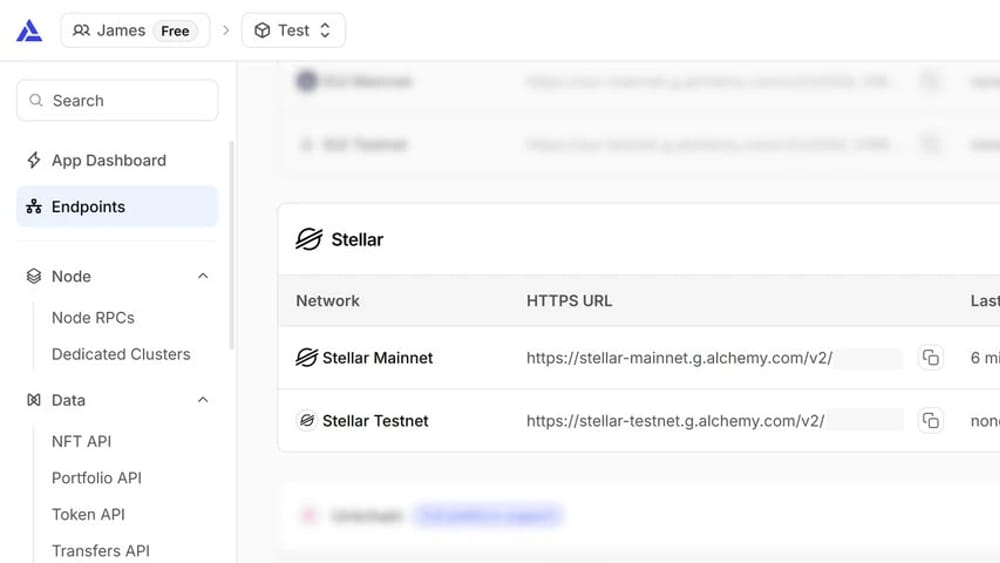
Stellar Developers Welcome AlchemyAlchemy now supports Stellar with JSON-RPC 2.0 endpoints and WebSocket support, enabling developers to query the network and build production applications using the js-stellar-sdk.

DeFi, payments, tokenization, Soroban, governance, and project launches — curated daily from publications, project blogs, and community channels across the Stellar blockchain ecosystem.
Alchemy now supports Stellar with JSON-RPC 2.0 endpoints and WebSocket support, enabling developers to query the network and build production applications using the js-stellar-sdk.
HTTP 402 Payment Required is enabling machine-to-machine payments at scale. Stellar's fast, cheap settlement layer is positioned as the ideal backbone for agentic AI systems to transact autonomously through x402 and MPP protocols.
Stellar Hacks Agents hackathon runs until April 13th. This guide covers 8 essential tips for building agentic AI projects on Stellar, from validating your idea and creating demo videos to setting up USDC trustlines and testing payment flows.
x402 and MPP agentic payment protocols enable micropayments for any web resource using Stellar's infrastructure, unlocking new revenue models for AI agents and humans across APIs, data feeds, content, and services without subscription friction.
Yardstick (Protocol 26) upgrade guide for the Stellar network with key dates, preparation steps for SDK users and infrastructure operators, and links to all relevant releases.
SCF #41 awarded 34 projects across three tracks (Open, Integration, RFP) with a total of $3,941,744 worth of XLM, the highest awarded round to date. The round marked the first under SCF 7.0's restructured framework and achieved perfect alignment between community voting and delegate panel decisions.
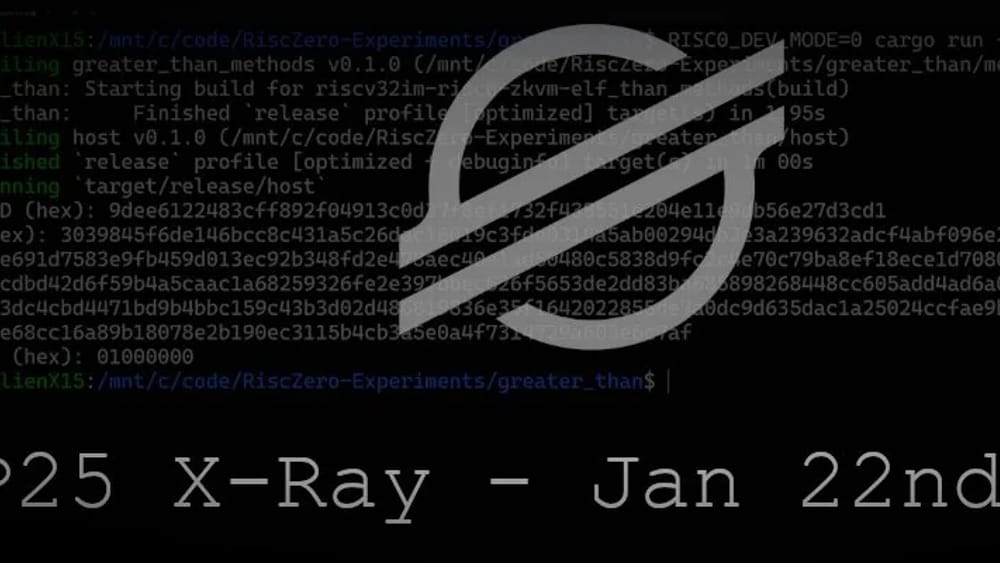
Stellar Protocol 25 (X-Ray) introduced BN254 elliptic curve and Poseidon hash function support, enabling zero-knowledge proofs as a first-class feature on Sor…
Stellar Hacks - Agents Hackathon launches on DoraHacks, challenging developers to build applications for the emerging agent economy using Stellar's testnet or…
Quantum computing progress has accelerated the timeline for cryptographic threats to blockchain. Research shows qubit requirements to break elliptic curve cryptography fell 44%, Google targets 2029 for quantum-safe systems, and major chains face a race condition during migration that leaves zero margin for error.
Space and Time released a guide for using SXT Studio to query, visualize, and analyze Stellar Network data. The tool supports SQL and natural language queries, dashboards, and custom explorer building for tracking wallets, transactions, and smart contracts.
Drips Wave 2 concluded with significant improvements to contributor diversity and reward fairness. Wave 3 launches March 23rd with new features including real-time Sybil defenses, AI-assisted workflows, and stricter contribution limits to prevent farming.
A technical deep-dive into Zero-Knowledge Proofs as a solution for blockchain scalability and privacy, featuring Noir DSL for circuit design and Soroban integration on Stellar. The author demonstrates production-ready ZK implementation through Cosmic Coder, a game that validates player progress on-chain using cryptographic proofs.
Stellar's X-Ray protocol introduces cryptographic infrastructure for opt-in, configurable privacy on the blockchain. The network is shifting from transparency-first to privacy-as-infrastructure, enabling compliant financial flows while maintaining regulatory integration capabilities.
Drips is launching Stellar Wave 2 on February 19th with major improvements including application quotas, post-contribution surveys, language filtering, org profiles, Discord linking, and enhanced spam protection.
Stellar Dev Skill is a new open-source tool that integrates with AI coding agents (Claude, OpenCode, Codex) to provide up-to-date Stellar development guidance, covering Soroban contracts, SDKs, APIs, wallets, security, and DeFi ecosystem resources.
The Stellar Development Foundation hosted a successful AMA on r/CryptoCurrency on January 28, reaching ~30k views and fielding 127 comments. The discussion co…
Nethermind has deployed a Groth16 zero-knowledge proof verifier on Stellar's Soroban smart contracts, enabled by Protocol 25 (X-Ray) which adds native BN254 a…
Nethermind deployed a RISC Zero Groth16 verifier to Soroban, and Stellar's X-Ray protocol upgrade adds native BN254 and Poseidon cryptographic primitives. Thi…
Stellar's Protocol X-Ray upgrade (January 2026) introduces zero-knowledge proof verification capabilities enabling developers to build privacy-preserving applications while maintaining ledger transparency. The article demonstrates how association sets and view keys allow private transactions within compliance frameworks, combining financial privacy with regulatory oversight.
A developer guide comparing three zero-knowledge proof frameworks for the zkGaming on Stellar hackathon: RISC Zero, Noir, and Circom. Each framework offers different trade-offs in expressiveness, ease of use, and on-chain verification complexity.
A comprehensive guide to building decentralized applications on Stellar's Soroban smart contract platform, covering essential developer tools, a step-by-step roadmap from setup through deployment, and community resources for support.
A retrospective on Stellar's 2025 hackathon ecosystem, highlighting how events evolved from weekend competitions into community-driven onboarding infrastructure. The article details 64 IRL events, 8,820 developer participants globally, and a shift toward long-term builder retention through mentorship and composability-focused hackathons.
Stellar Protocol 25 X-Ray, voting tomorrow, introduces native zero-knowledge proof verification capabilities to Stellar smart contracts, including support for BN254 elliptic curves, Poseidon hashing, and Noir circuit verification.
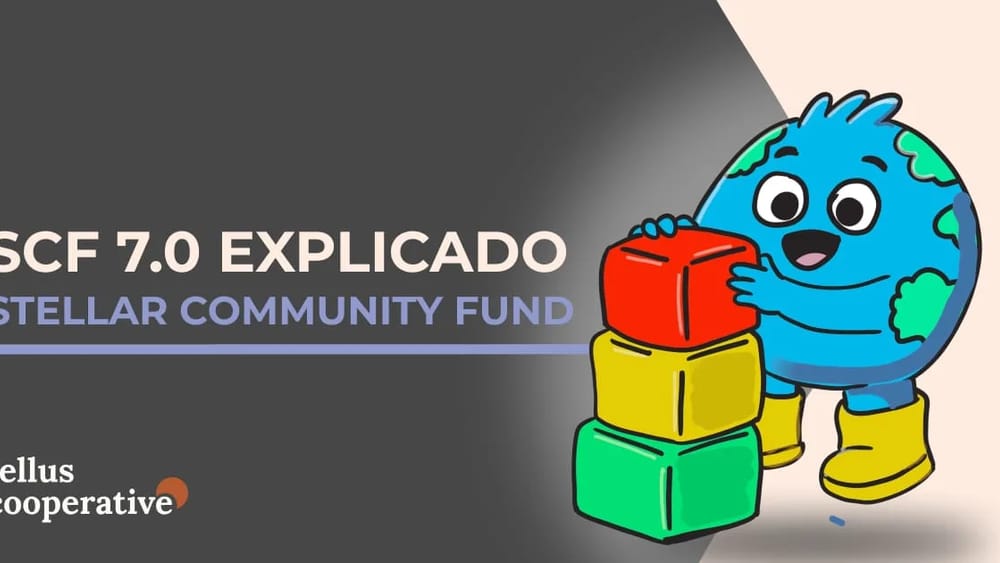
This article provides a comprehensive Spanish-language guide to Stellar Community Fund (SCF) 7.0, explaining its funding process, key changes, and application steps for builders in the Stellar ecosystem. It covers the Interest Form entry point, three Build tracks (Open, Integration, RFP), tranche-based funding up to $150K-$300K in XLM, and practical tips for maximizing success. SCF emphasizes real products, execution, and community governance over mere ideas.
The Stellar Development Foundation has launched SCF v7.0, a major upgrade to the Stellar Community Fund grant program featuring three new build award tracks (Integrate, Open, RFP), improved submission pathways with referral incentives, milestone-based funding tied to execution, ambassador-led Instawards for early-stage projects, and post-launch growth pathways for successful teams.
An article discussing the importance of financial privacy in blockchain systems and how Stellar's upcoming Protocol X-Ray upgrade will enable zero-knowledge proof verification in Soroban smart contracts, allowing developers to build privacy-preserving applications while maintaining blockchain transparency.
Inference, a formal verification framework, analyzes three WebAssembly-based blockchain platforms—Polkadot Substrate, Stellar Soroban, and Arbitrum Stylus—evaluating their architectural suitability for formal verification of smart contracts and core infrastructure.